






What Is Our Whole-Child Development Approach?
If you've toured more than one preschool in Northridge, you've probably heard the phrase "whole-child development" a lot, usually without much explanation of what it actually changes about your child's day. At Strong Roots Preschool, our whole-child development approach means we don't treat a child's brain, body, feelings, and relationships as separate subjects on a schedule. We treat them as one connected system, because that's what the research on early childhood actually shows. This guide walks through what the philosophy means, why the developmental domains work together instead of in isolation, and how Strong Roots structures a real day in Northridge around that idea.
This isn't an activity list. If you're looking for specific gross motor, fine motor, or cognitive games to try at home tonight, our companion guide on fun activities to boost your child's growth and development covers that ground with CDC and AAP-backed specifics. What follows here is the "why," the philosophy underneath those activities and underneath how we built our program in the first place.
What is whole-child development, and why does it matter?
Whole-child development is an educational philosophy that treats a child's physical, cognitive, social-emotional, and language growth as one interconnected process, not four separate subjects to check off. The National Association for the Education of Young Children (NAEYC) frames it this way: development happens across "physical development, cognitive development, social and emotional development, and linguistic development... as well as approaches to learning," and critically, "each domain both supports and is supported by the others."
That last part is the piece that gets lost in a lot of parenting content. It's not that a good preschool happens to offer art class and gym time alongside letters and numbers. It's that the letters-and-numbers learning actually works better when it's wrapped inside physical activity, secure relationships, and emotional regulation, because those things are feeding the same developing brain at the same time.
The idea isn't new or niche. ASCD's Whole Child Initiative, launched in 2007, reframed education "from a focus on narrowly defined academic achievement to one that promotes the long term development and success of children." It's built on five tenets: every student should be healthy, safe, engaged, supported, and challenged. None of those five words are about test scores. All five are about the conditions a child needs before real learning can happen at all.
How are physical, cognitive, social-emotional, and language development connected?
The connections aren't theoretical, they show up in specific, documented ways. NAEYC points out that "sound nutrition, physical activity, and sufficient sleep all promote children's abilities to engage in social interactions that, in turn, stimulate cognitive growth." A tired, under-fed, sedentary child has a harder time forming friendships, and a child who struggles socially has a harder time absorbing new academic concepts. The chain runs in both directions.
Early-childhood domain research lays out the mechanism a little more specifically: physical development, like the fine motor gains that let a child grasp and manipulate objects, opens the door to cognitive development, because a child who can physically explore her environment learns more from it. Cognitive gains, in turn, help a child better understand and manage her own emotions and read other people's. And a child who feels secure and valued, which is a social-emotional strength, is simply more willing to explore and take the small risks that learning requires. Each domain hands something off to the next one.
This is also why some of the more rigorous global measurement tools don't try to score domains separately. The World Health Organization's Global Scales for Early Development assess children across cognitive, motor, language, and social-emotional domains together, producing one integrated developmental picture rather than four disconnected scores, because researchers have found these dimensions can't be meaningfully assessed in isolation from each other.
How is this different from an academics-only preschool?
An academics-only model measures a child by how many letters or numbers they can recite. A whole-child model measures a child by whether they're healthy, safe, engaged, supported, and challenged, and treats academic skill as one outcome of that foundation, not the whole of it. That's the practical difference, and it isn't a small one.
ASCD's whole-child framing describes a successful learner as someone who is "knowledgeable, emotionally and physically healthy, civically inspired, engaged in the arts, prepared for work... and ready for the world beyond formal schooling," not someone measured solely by a test. A child can ace a worksheet and still struggle to sit with a group at lunch, wait for a turn, or recover from a small disappointment. Whole-child programs are built around the idea that those skills matter just as much, and that they're teachable in the same way ABCs are.
For a parent standing in a preschool lobby trying to decide between two programs, this distinction is often invisible until you ask the right question. An academics-only program can usually tell you exactly what a three-year-old will be able to recite by the end of the year. A whole-child program will more often tell you about the conditions it builds around a child: how she's supported when she's frustrated, how conflicts on the playground get handled, how a math concept gets taught through a game instead of a worksheet. Both answers matter. Whole-child programs are simply built to answer both.
There's also an outcomes case for this, not just a philosophical one. Teaching Strategies, summarizing current early-childhood research, reports that children in playful, integrated programs show "sustained learning, stronger conceptual understanding, and better knowledge retention" than children in narrowly academic models. The same research ties integrated approaches to gains in working memory, self-regulation, oral language, and social competencies, the kinds of foundational skills that make later academic learning stick rather than evaporate over summer break.
Harvard's Center on the Developing Child, cited within that same research summary, goes a step further: the quality of a child's early relationships shapes mental health, learning motivation, academic achievement, social competence, and adult success. That's a lot of long-term weight resting on something as simple as whether a toddler feels secure with the adults around her. An academics-only model has no real place to put that finding. A whole-child model builds around it.
What domains does a whole-child program cover?
Most whole-child frameworks name the same handful of domains, even when the wording differs slightly between organizations. NAEYC's list is physical, cognitive, social-emotional, and linguistic development, plus general "approaches to learning" like attention and persistence. NAEYC's Developmentally Appropriate Practice framework also recommends programs intentionally address academic content, literacy, mathematics, science, social studies, the arts, and health, but embedded inside those developmental domains rather than taught as separate periods of the day.
Arizona State University's Center for Whole-Child Education, as reported by Teaching Strategies, describes the goal as a methodology that "prioritizes comprehensive student development" across "academic, social, emotional, physical, and cognitive needs." Other operators in the early-education space break the same idea into a slightly longer list. Safari Kid, for instance, uses a "5+1" framework of cognitive, emotional, language and literacy, physical, and social development, plus a specialized health and self-care domain, as one illustrative way programs sometimes slice up the same underlying idea.
NAEYC's mention of "approaches to learning" alongside the four core domains is the one families most often overlook. It covers things like attention span, persistence through a hard task, curiosity, and the ability to shift from one activity to another without a meltdown. None of that shows up on a report card the way "can count to twenty" does, but it's arguably just as important, since a distracted or easily frustrated child has a harder time benefiting from good instruction in any other domain.
The exact number of domains matters less than the principle behind all of them: nothing on the list stands alone. A strong program doesn't schedule "physical development" from 9:00 to 9:20 and "cognitive development" from 9:20 to 9:40. It looks for activities, a puzzle, a group game, a story, a piece of playground equipment, that quietly work two or three domains at once. If you want to see what that looks like activity by activity, sorted by age and domain, that's exactly what our companion guide to fun activities that boost your child's growth and development walks through in detail.
Why does this approach matter for long-term success?
It matters because the domains keep reinforcing each other well past the preschool years, and neglecting one tends to show up as a gap in the others later. A child who gets consistent physical activity and enough sleep is better positioned for the social interactions that, per NAEYC, stimulate cognitive growth. A child who feels secure and supported is more willing to take the exploratory risks that produce real learning. Skip the foundation and the academic layer sitting on top of it gets shakier, even if it looks fine for a while.
The research summarized by Teaching Strategies backs this up directly: children who experience integrated, whole-child learning environments build "working memory, self-regulation, oral language, and social competencies" alongside academic content, and they retain what they learn better than children in narrowly academic settings. Those are the skills that determine whether a child thrives in a kindergarten classroom two years from now, not just whether they can currently identify a triangle.
For families making a preschool decision right now, the practical takeaway is simple: ask how a program handles the moments that aren't on the curriculum, a meltdown before nap time, a shy child on the first day, a disagreement over a toy. Those moments are where the domains actually connect, and they tend to say more about a program's real philosophy than any list of letters and numbers a three-year-old can recite.
And the relationship piece may matter most of all. Harvard's Center on the Developing Child, as cited by Teaching Strategies, links the quality of a child's early relationships to mental health, learning motivation, academic achievement, social competence, and adult success, outcomes that stretch decades past a preschool report card. A whole-child approach isn't a soft alternative to rigor. It's an attempt to build the actual foundation rigor depends on.
How does Strong Roots Preschool put whole-child development into practice in Northridge?
Strong Roots Preschool is a family-owned, independent program in Northridge, California, founded in 2022, and it structures six program tracks, Infant, Toddler, Young Preschool, Preschool, Pre-Kindergarten, and After School, around a whole-child philosophy rather than a single academic curriculum. The goal across all six is the same: treat physical, cognitive, social-emotional, and language growth as connected, at whatever age a child walks through the door.
The curriculum draws from play-based learning, Montessori-inspired methods, and STEAM principles, combined with that whole-child developmental focus. Strong Roots is licensed by California's Community Care Licensing Division (part of the California Department of Social Services), under LIC #195700760, and is located at 9054 Darby Ave, Northridge, CA 91325.
That range matters because this approach doesn't stop applying once a child ages out of preschool. The six tracks span from infancy through the after-school age range, up to roughly age 13, based on how the school describes its own service span. A toddler working on gross motor skills and a nine-year-old working through an after-school project are both being supported across the same physical, cognitive, social-emotional, and language domains, just at different points on the same continuum. Strong Roots serves families in Northridge and the surrounding San Fernando Valley, which means a child can move from their first year of care through elementary school age without switching philosophies partway through.
What role do play-based learning, Montessori-inspired methods, and STEAM play?
Play-based and Montessori-inspired methods share a core assumption with the whole-child research above: children learn best through hands-on, self-directed experience rather than passive instruction. STEAM principles (science, technology, engineering, arts, and math) layer academic content into that same hands-on structure instead of pulling it out into a separate lesson block. That mirrors exactly what NAEYC's DAP framework recommends, intentionally addressing academic areas like literacy, math, and science, but doing it inside developmentally appropriate, relationship-rich experiences rather than as an isolated drill.
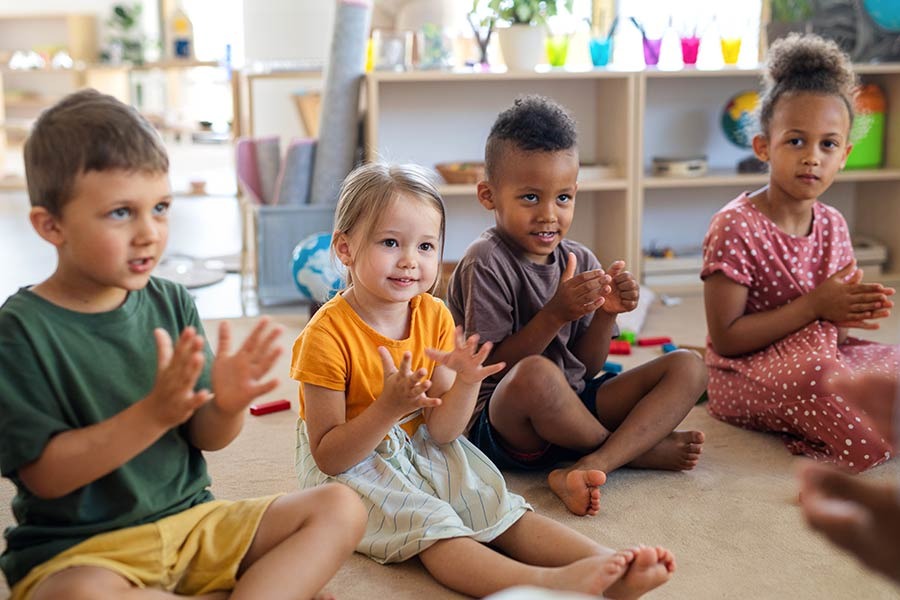
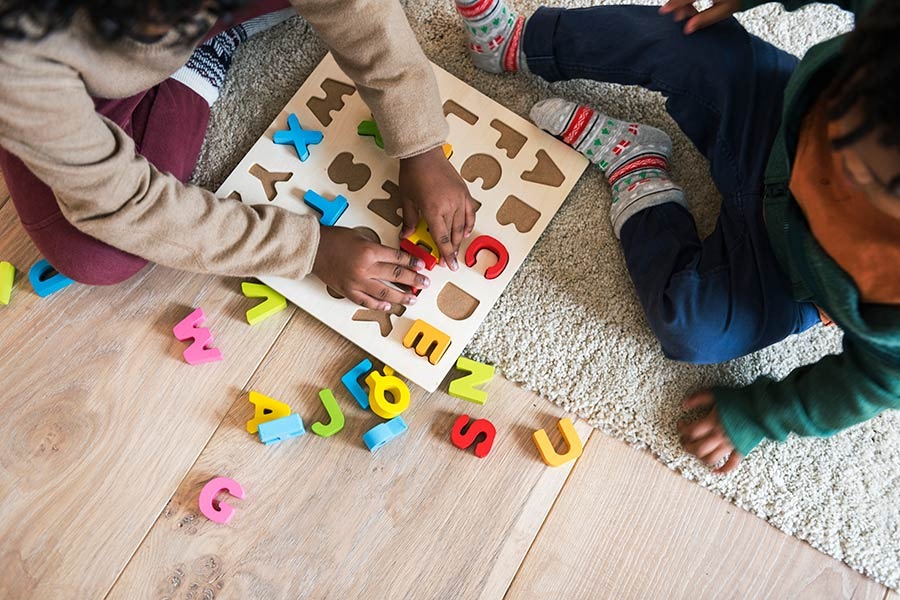
In practice, that means a single classroom moment, building with blocks, working through a puzzle, or acting out a story, is rarely doing just one job. It's usually building fine motor control, spatial reasoning, and social cooperation at the same time, which is the entire point of a whole-child structure rather than a subject-by-subject one.
If you'd like to see what a full day built this way looks like for your child's age group, you can explore our Northridge programs or schedule a tour to walk the classrooms in person.
How does founder Narine Mazmanyan's background shape the approach?
Strong Roots Founder and Director Narine Mazmanyan brings a background in psychology, pedagogy, and healthcare to the school's structure, an unusually broad combination for a preschool leadership team. She studied psychology and pedagogy at the Pedagogical Institute of Armenia and completed medical training at Armenian State Medical College, with additional education at Los Angeles ORT College and Marian College in the United States.
That combination shows up directly in the whole-child framing. A psychology and pedagogy background supports the cognitive and social-emotional side of the philosophy, understanding how young children think, regulate feelings, and form relationships. A healthcare background supports the physical side, understanding growth, nutrition, and the physiological needs NAEYC identifies as foundational to everything else a child does. Few preschool directors bring both halves of that picture under one roof.
How does Armenian language preservation fit into a whole-child program?
Strong Roots pairs its whole-child developmental approach with Armenian language preservation, based on the premise that Armenian-American children risk losing active fluency in their heritage language without continued instruction. Inside a whole-child framework, that's not a bolt-on cultural extra. Language and literacy development is one of the core domains named directly in NAEYC's whole-child definition, alongside physical, cognitive, and social-emotional growth.
Teaching a heritage language alongside English gives children a second, active channel for the same linguistic domain the whole-child research already treats as inseparable from cognitive and social development. A child building vocabulary, storytelling ability, and communication skill in Armenian is building the same underlying language competencies that support reading readiness in English, just through a second channel that also keeps them connected to family and culture.
For non-Armenian families touring Strong Roots, this often raises a fair question: does a second language slow down English development? The domain-interconnection principle described earlier suggests that's the wrong thing to worry about. Language, in whichever language it's built, is one interconnected domain among several, and strengthening it tends to support cognitive and social growth rather than compete with it.