



What Is Social-Emotional Learning, and Why Does Our Preschool Curriculum Build It on Purpose?
A social-emotional learning curriculum for preschool teaches kids how to name what they feel, calm down when they're overwhelmed, read another child's face, make a friend, and choose kindness when nobody's forcing them to. At Strong Roots Preschool in Northridge, we don't leave that to chance. We build it into the day the same way we build in letters and numbers, with specific skills, specific teacher moves, and a framework behind it: the CASEL 5.
If you've ever watched a three-year-old go from giggling to sobbing in about four seconds, you already know why this matters. Big feelings arrive well before the words to handle them do. The gap between the two is exactly where preschool teachers spend most of their day, and it's exactly where a real curriculum, not just a poster on the wall that says "be kind," earns its keep.
This piece walks through what social-emotional learning actually is, the five competencies that organize it, and what a teacher does in the moment when a child melts down, grabs a toy, or needs help joining a game. Every claim here traces back to CASEL, NAEYC, or published research on preschool development, not vague "studies show" language.
What Is Social-Emotional Learning (SEL), Exactly?
Social-emotional learning is the process by which children (and adults) develop the skills to understand their emotions, manage their behavior, and build healthy relationships with the people around them. The Collaborative for Academic, Social, and Emotional Learning, known as CASEL, is the organization most schools and researchers point to for a working definition. CASEL describes SEL as the process through which people acquire and apply the knowledge, skills, and attitudes needed to develop healthy identities, manage emotions, achieve goals, feel and show empathy, build supportive relationships, and make responsible, caring decisions.
That's a mouthful, so here's the plain version: SEL is the stuff that determines whether a kid can wait their turn, ask for help instead of hitting, notice when a friend is sad, and bounce back after a bad morning. None of that is automatic. It gets taught, practiced, and modeled, the same as counting to twenty.
CASEL's own research summary makes a point worth sitting with: SEL in schools leads to better academic performance and lower stress and anxiety. That's not a fringe claim from one preschool blog. It's the organization that coined the term saying it plainly.
What Are the CASEL 5 Competencies, and How Do They Show Up in Preschool?
CASEL organizes social-emotional learning into five competencies: self-awareness, self-management, social awareness, relationship skills, and responsible decision-making. These aren't abstract categories for a college syllabus. Each one shows up in a preschool classroom every single day, usually multiple times before snack.
What Is Self-Awareness, and How Do Toddlers Practice It?
Self-awareness is the ability to understand your own emotions, thoughts, and values, and to notice how they shape what you do. For a two- or three-year-old, that starts with something as basic as naming a feeling correctly.
In the classroom, this looks like helping a child identify and express what's happening inside them, sad, happy, excited, worried, before asking them to do anything about it. A teacher might crouch down and say, "Your face looks upset. Are you feeling frustrated because the tower fell?" That's not small talk. Giving a child the right word for a feeling is the first step in managing it, and it's a skill preschoolers are only beginning to build. Self-concept work like this, expressing preferences and identifying your own feelings alongside other people's, is one of the earliest and most repeatable pieces of a real SEL curriculum.
What Is Self-Management, and How Do Teachers Help Kids Regulate Big Emotions?
Self-management is the ability to manage your emotions, thoughts, and behavior effectively, even when things don't go your way, in order to reach a goal. This is the one parents usually mean when they say "emotional regulation," and it's the hardest of the five for young children, because it isn't a skill kids are born with. It develops, and preschool is one of the central windows for building it.
Here's the part most SEL explainers skip: regulation isn't a switch a child flips on their own. It's taught through co-regulation first. A calm, warm adult lends a child their own nervous system, so to speak, staying steady while the child is not, matching support to where that child actually is developmentally rather than where we wish they were. Over time, with enough practice alongside that steady adult, the child starts to internalize the skill and do more of it independently. Positive, warm, emotionally responsive interactions between teacher and child are linked to stronger development of a child's own regulation skills, which is one reason consistency with the same caregivers matters so much at this age.
What Is Social Awareness, and How Does Empathy Get Taught?
Social awareness is the ability to understand and empathize with other people's perspectives, including people whose backgrounds and experiences differ from your own. In a three-year-old, that starts small: noticing that a classmate looks left out and doing something about it.
Picture a fairly ordinary classroom moment. One child is playing alone at the sensory table while another notices, walks over, and asks if he wants to build together. That's social awareness in action, and it's exactly the kind of moment a good curriculum is designed to create space for, not just hope happens on its own. Teachers set up the room and the routines so those noticing-and-including moments have somewhere to happen, then narrate and reinforce them out loud when they do.
What Are Relationship Skills, and How Do Kids Practice Them Daily?
Relationship skills are the abilities to build and maintain healthy relationships and to navigate all the different personalities and situations that come with being around other people. For preschoolers, that mostly means cooperating, taking turns, and, sooner or later, working through conflict without a teacher solving it for them.
Conflict is not a sign the classroom is doing something wrong. It's the raw material relationship skills get built from. Preschoolers tend to resolve disagreements a few different ways: grabbing or pushing to get what they want, walking away, simple back-and-forth negotiation, or, with practice, more sophisticated problem-solving. A teacher's job is to nudge that progression along, and the research-backed way to do it is a structured process rather than a lecture. We'll walk through exactly what that looks like in the next section.
What Is Responsible Decision-Making at Age 3, 4, or 5?
Responsible decision-making is the ability to make caring, constructive choices about your own behavior and how you treat others, across all sorts of situations. That sounds like a skill for teenagers, but it starts absurdly early. It looks like a three-year-old choosing between two centers, following a classroom routine without being walked through it step by step, or handling the transition from playtime to circle time without a meltdown.
Preschoolers practice this through self-direction: making choices with only a little outside guidance, following rules and routines, and moving between activities. It also shows up when a child weighs a simple tradeoff, like deciding whether to keep the good crayon or hand it to a friend who's been waiting. Small stakes, real practice.
How Do Teachers Actually Teach Emotional Regulation to Young Children?
Emotional regulation doesn't get taught through a worksheet or a single lesson. It gets built through repeated, in-the-moment interactions, mainly three: co-regulation, emotion coaching, and structured conflict resolution. Here's what each one actually looks like.
What Is Co-Regulation, and Why Does It Come Before Self-Regulation?
Co-regulation is what happens before self-regulation is possible. Young children learn to manage their emotions gradually, by watching and practicing alongside a more experienced, emotionally warm adult who stays steady while they're not. The adult isn't fixing the child's feelings for them. They're providing the calm, consistent presence a child's developing brain can borrow from until it can generate that steadiness on its own.
This matters for how we set up a Strong Roots classroom day to day. Teachers aim to match their support to where a specific child is, not to a generic script, since co-regulation only works when the adult's response fits the child's actual developmental stage in that moment. That's part of why smaller ratios and consistent teachers matter so much in the toddler and young preschool rooms: a child needs to know which adult they're borrowing calm from.
What Is Emotion Coaching, and How Does It Work in a Classroom?
Emotion coaching is a five-step framework, most closely associated with psychologist John Gottman's research on parenting and emotion, that gives adults a repeatable way to respond when a child is upset instead of reacting on instinct. The five steps: notice the child's emotion, treat it as a chance to teach and connect rather than a problem to shut down, listen and validate what the child is feeling, help the child put a word to the emotion, and then problem-solve or set a limit together.
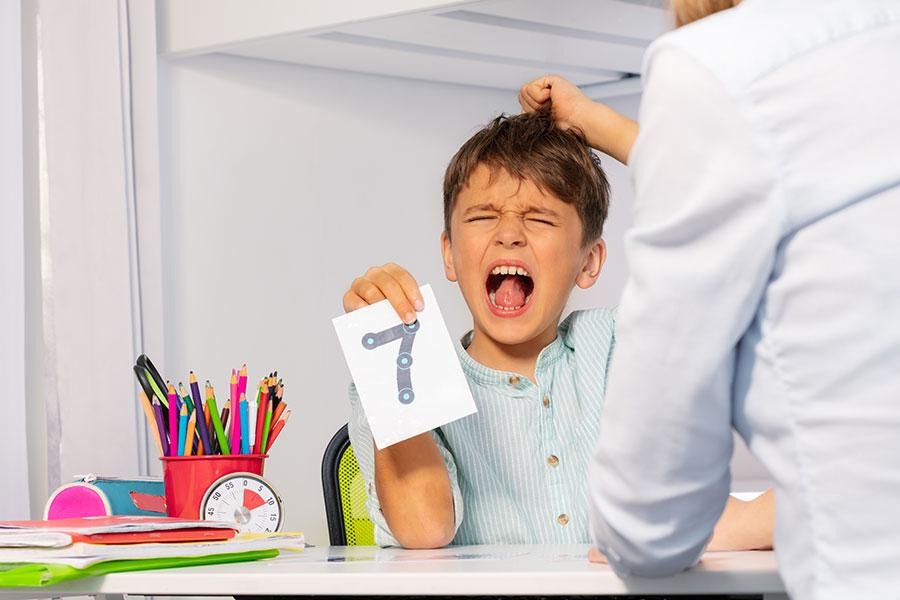
In practice, it sounds less clinical than it looks on paper. A child slams a block tower down and yells. A teacher trained in this approach doesn't say "we don't yell here" and move on. She gets down to eye level, names what she's noticing ("you look really frustrated"), waits for the child to confirm or correct that, and only then moves toward a next step, whether that's rebuilding the tower or taking a breath together first.
It's worth being straightforward about the evidence here. Research on emotion coaching links the approach to better emotional regulation, stronger problem-solving, and fewer behavior problems over time, but that research comes largely through a secondary source summarizing outcome studies rather than a single, independently verified randomized trial we can point to and name. So we'll say it the honest way: this is a well-regarded, widely taught framework with research behind it, not a single miracle study.
How Do Teachers Walk Kids Through Conflict Resolution?
When two preschoolers both want the same toy, the fastest fix is for an adult to grab it and hand it to whoever asked first. It's also the least useful thing a teacher can do, because it teaches nothing. A better approach is a structured, adult-facilitated process built for exactly this age group: approach calmly and stop anything hurtful first, acknowledge both children's feelings, gather information about what happened, restate the problem in simple language, ask the children themselves for solution ideas and pick one together, then follow up afterward to see how it worked.
That last step matters more than it sounds like it should. A resolution that gets forgotten the moment the teacher walks away doesn't build a skill. Circling back, even briefly, is what turns a one-time fix into something a child starts trying on their own the next time a conflict comes up.
Does SEL Really Improve Academic Outcomes?
Short answer: yes, and the research on this goes back further and runs deeper than most "be kind" campaigns let on. A large 2011 meta-analysis by Durlak and colleagues looked at 213 school-based SEL programs and more than 270,000 K-12 students, and found an 11-percentile-point gain in academic achievement for students in SEL programs compared with those who weren't, along with improvements in social and emotional skills, attitudes, and behavior.
That study covers kindergarten through twelfth grade broadly, so here's the piece that matters more specifically for a preschool: research from Denham and colleagues has found that a preschooler's emotional competence, meaning their ability to recognize and understand emotions, uniquely predicts later academic achievement, even after accounting for a child's prior academic performance. In plain terms, a four-year-old's emotion knowledge is doing real predictive work on how that same child performs in first grade, independent of how "ahead" academically they already were.
Why would understanding your own feelings have anything to do with reading or math? Because a dysregulated kid isn't learning much of anything in that moment. A child who can't calm down enough to sit through a lesson, or who's too anxious about a peer conflict to focus, is spending their attention on survival, not on the letters on the page. Build the regulation first, and the academic learning has somewhere to land.
What Does This Look Like Inside a Strong Roots Classroom?
Strong Roots Preschool is run by founder and director Narine Mazmanyan, whose background spans psychology, pedagogy, and healthcare, a combination that shapes how seriously the school treats the emotional side of early childhood rather than treating it as an afterthought to academics. That background is part of why SEL isn't bolted onto our curriculum. It's built into it.
Day to day, that means our teachers are trained to use the co-regulation, emotion coaching, and conflict-resolution approaches described above, not as occasional interventions but as the default way the classroom runs. It also means our programs, Infant Care, Toddler Care, Young Preschool Care, Preschool Care, Pre-Kindergarten Care, and our After School Program for grades K through 5, are built around consistent teachers and small enough groups that co-regulation is actually possible, not just a nice idea on paper.
Strong Roots also offers enrichment beyond the core SEL and academic curriculum, including chess, math enrichment, arts and crafts, STEAM activities, and Armenian language instruction. On that last one: Strong Roots is one of relatively few licensed San Fernando Valley preschools offering Armenian language class, which matters to a lot of Northridge families raising bilingual or multilingual kids. Strong Roots is CCRC licensed (License #195700760) and accepts CCRC and Crystal Stairs subsidies, which opens the door for more Northridge families to access this kind of program.
If you want to see what a day built around these principles actually looks and feels like, the best next step is a visit. You can call (323) 990-8181 or email info@strongrootspreschool.com to set up a tour of the Northridge campus at 9054 Darby Ave.
How Can Parents Support SEL at Home?
The good news is that none of this requires a curriculum at home. It requires consistency with a handful of habits.
Be a role model. Kids learn how to manage emotions largely by watching the adults around them do it, or not do it. How you handle your own frustration in front of your child teaches more than any lesson you could plan.
Practice role-play. Acting out a scenario, a friend not sharing, a sibling grabbing a toy, helps a child rehearse perspective-taking before they need it for real.
Talk about feelings as a normal part of the day, not a special occasion. Folding it into regular conversation, "how did that make you feel," "what do you think your friend was feeling," normalizes emotional language the same way talking about colors and shapes normalizes vocabulary.
Set small, specific goals. Something concrete like practicing a self-calming strategy is easier for a young child to work toward than a vague goal like "be good."
Practice working in pairs. Simple collaborative activities build turn-taking and cooperation in low-stakes settings.
Use stories to talk about characters' emotions. Pausing during a book to ask what a character might be feeling, and why, builds the same empathy muscle social awareness depends on.
Ready to see this in action? Schedule a tour of Strong Roots Preschool and ask our teachers how they use these exact techniques in the classroom every day.