

The Twaddler Transition: A 2-Year-Old Transition Program in Northridge, CA
Somewhere around age two, your toddler stops being a toddler and turns into someone new: a kid who talks in short phrases, insists on doing things alone, and dissolves into tears when the plan changes. That in-between stretch is exactly why Strong Roots Preschool built a 2-year-old transition program in Northridge, CA. We call it the Twaddler Transition, our own name for the stage between toddlerhood and preschool, and it exists because a generic classroom rarely fits a child at this age.
If you're wondering whether your two-year-old is ready to move out of the toddler room, whether the tantrums are normal, or how a good preschool actually handles that move, you're in the right place. Below we walk through what the research says about this age and how our Northridge classrooms put that research into practice. Parents searching for a 2-year-old transition program in Northridge usually have all three questions at once, and they deserve real answers to each before they book a tour.
What Is a 2-Year-Old Transition Program?
A 2-year-old transition program is built for the stretch after toddlerhood but before a child is ready for a fully structured preschool classroom, roughly ages two and a half to three and a half. It blends the comfort and pace of toddler care with more structured, preschool-style activities, rather than asking a child to jump from one to the other overnight.
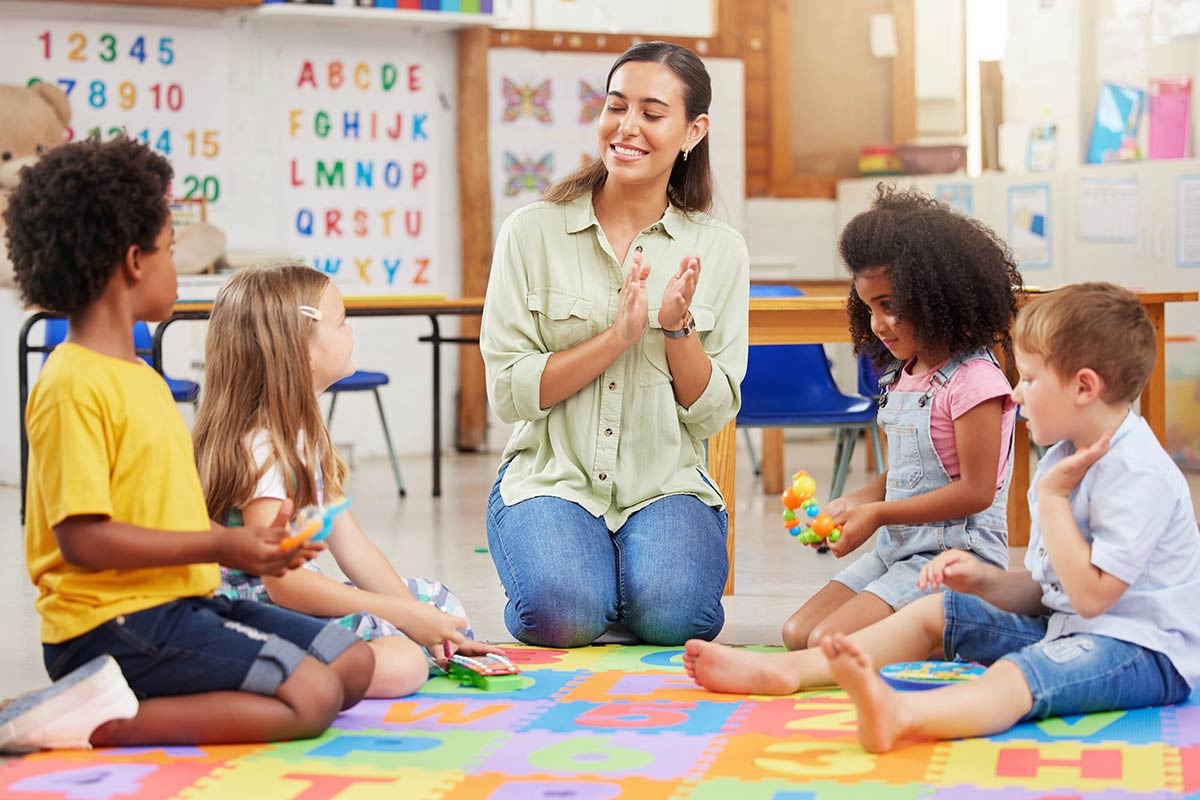
At Strong Roots, that program has a name: Young Preschool Care, for children 2.5 to 3.5 years old. It's designed to bridge our Toddler Care classroom (ages 2 to 3) and our full Preschool Care classroom (ages 3 to 4), and it includes structured daily activities, a weekly Armenian language class, outdoor play, and three meals and snacks a day, Monday through Friday. You can see the full breakdown on our Programs page.
Why Doesn't "Toddler" or "Preschool" Alone Fit This Age?
Because a two-year-old is doing two contradictory things at once. Language is exploding. According to CDC guidance, most children reach the 24-month milestone of putting at least two words together, something like "more milk," and from there vocabulary and short phrases build quickly. At the same time, the part of the brain that manages self-control is still years from catching up to the part that generates big emotions, so meltdowns and pushback are part of the package too.
That language explosion has a specific shape. Understanding tends to run ahead of speaking at this age, so a two-year-old often follows more than they can say. Most children start combining words into simple two-word phrases somewhere between 24 and 30 months, things like "more snack" or "Daddy go," which is a real step toward full sentences even though it doesn't sound like one yet.
A toddler room, built around infants-to-young-toddlers routines, is too loose for a child asking "why" about everything. A standard preschool room, built around three- and four-year-olds who can sit for circle time and follow multi-step directions, is often too much structure too soon. The Twaddler stage needs both worlds: the patience of toddler care and the beginning of preschool structure.
Are Tantrums at Age 2 Normal?
Yes. Pediatric sources are consistent on this: tantrums at two are typical and close to universal, not a sign that something is wrong with your child or your parenting. According to the American Academy of Pediatrics' HealthyChildren.org resource, anger and frustration at this age tend to erupt suddenly as crying, hitting, or screaming, because two-year-olds simply haven't developed the skills yet to manage those impulses.
This is also the age when children are wired to test limits, their own, yours, and the room's, which is a normal and even healthy push toward independence. The catch is that a two-year-old still doesn't have the judgment to know which limits are actually about safety, so they need adults to hold those boundaries consistently while the testing plays out.
CDC's positive-parenting guidance for toddlers points in the same direction: consistent, calm limit-setting and steady routines are the tools that help children this age move through the phase, not stricter discipline or more explanation than a two-year-old can process. The goal isn't to stop testing behavior. It's to meet it with the same calm response every time, so the limit itself becomes predictable even when the child's reaction to it isn't.
What's Happening in a 2-Year-Old's Brain During a Meltdown?
Zero to Three explains it this way: the brain regions responsible for generating strong emotion mature well before the regions responsible for self-control. A two-year-old feels the full force of frustration, disappointment, or anger before they have any real capacity to regulate it. A tantrum is both an expression of that emotion and, in a very real sense, a call for help.
That's where co-regulation comes in, a calm adult response that helps a child slowly learn to manage big feelings over time. Toddlers this age also don't yet have the words to say "I'm frustrated" or "I'm disappointed," so those feelings come out physically instead, through crying, hitting, or throwing themselves on the floor. This isn't defiance. It's a communication gap that closes gradually as language catches up, and according to Zero to Three's tantrum research, tantrums are described across pediatric and childcare sources as typical for children between roughly 18 and 36 months, easing as language and self-regulation mature.
Separation can trigger a similar reaction. HealthyChildren.org notes that children may protest being dropped off with tantrums, whimpering, or withdrawal, and the recommended response is reassurance and praise at reunion rather than punishment. Separation reactions like this typically ease by around age three, right around when most kids are settling into a preschool classroom for good.
When Should My Child Move From the Toddler Room to the Preschool Room?
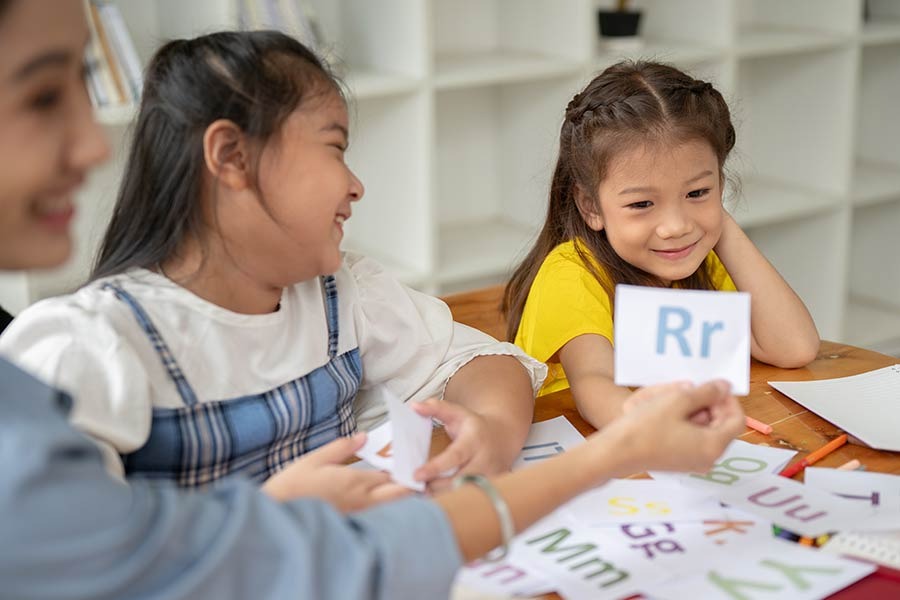
There's no single birthday that triggers the move. Age matters, but it isn't the whole picture. Programs that get this right look at how a child communicates (using words, gestures, or pointing to express needs), whether they can handle a short transition like clean-up time with an adult's support, and how comfortable they seem with new routines and new caregivers.
That's part of why our Young Preschool Care program covers a wider band, 2.5 to 3.5 years, instead of a hard cutoff. Some children are ready for more structure at two and a half. Others need a few more months in a toddler-paced room first. Both are normal, and a good transition program is built to flex around that instead of forcing every child through the same door on the same schedule.
None of that means readiness is a mystery either. The most reliable signal tends to be a combination: enough spoken or gestured communication to make basic needs known, enough tolerance for short transitions like clean-up time to get through a longer school day, and enough comfort with a new adult to accept help from them. A child can be strong in one area and still developing in another, which is exactly why the decision gets made classroom by classroom instead of by a birthday on the calendar, and exactly the kind of flexibility a good 2-year-old transition program needs to build in.
What Are the Signs My 2-Year-Old Is Ready to Transition Classrooms?
Readiness tends to show up in small, specific behaviors rather than one big moment. According to early childhood transition research from Day Early Learning, early signs of a healthy adjustment include a child being comforted by new teachers, accepting help from them, exploring the new classroom space on their own, and starting to settle into its daily routine.
Brief hesitation or a step backward during the process is still part of a normal transition. Children vary quite a bit in how fast they adjust, and a rough first week doesn't mean the move was the wrong call. What matters more is the trend over the following weeks: is your child warming up to the new room, or staying stuck at the same point of resistance?
How Can I Help My Toddler Adjust to a New Classroom?
Four things make the biggest difference, and none of them require anything fancy. Keep routines as consistent as possible between home and school. Use a visual schedule so your child can see what's coming next instead of being surprised by it. Let a comfort object travel with them if the new classroom allows it. And favor a gradual move over a sudden one.
According to the 4-C Community Coordinated Child Care resource on early childhood transitions, consistency across classroom and home routines helps children feel safe, largely because they know what's coming next. Visual schedules are called out specifically as one of the most effective tools for preparing young children for change, since predictability lowers anxiety on its own.
Do Comfort Objects and Consistent Routines Really Help?
They do, and the research backs a specific approach. Lillio's guidance on supporting classroom transitions points to transitional objects, a favorite toy, a small blanket, anything familiar, as a bridge between one setting and another. The object itself isn't magic. It works because it's familiar, and familiarity is exactly what a two-year-old's nervous system is looking for during change.
Timing matters too. Standard ECE practice calls for a gradual, phased move: in the one to two weeks before a full switch, a child visits the new classroom regularly, spending a little more time there each day, so the new routines feel familiar before the move is permanent. A same-day switch from one room to another, with no lead-in, is harder on a child than the same move spread out over two weeks.
We build our own classroom transitions around this same research. A child moving from Toddler Care into Young Preschool Care gets visits to the new room in the weeks beforehand, a teacher who already knows their name before the official move date, and permission to bring whatever comfort object helps most. It's the same gradual approach described above, just applied inside our own transition program instead of left as general advice.
What's the Difference Between a Toddler Program and a Young Preschool Program?
The two overlap on purpose. Toddler Care, for ages 2 to 3, and Young Preschool Care, for ages 2.5 to 3.5, share the same foundation: structured daily activities, weekly Armenian language instruction, outdoor play, and three meals and snacks each day. What changes is the layer on top. Young Preschool Care builds in more structured, preschool-style activities on that same base, rather than dropping a child straight from toddler routines into a fully structured preschool classroom.
Think of it less as two separate systems and more as one continuous track with a gear shift in the middle. A child doesn't leave everything familiar behind. They keep the routines and relationships that already feel safe while gradually taking on more structure, which is exactly the kind of gradual, phased change that transition research recommends.
That continuity is also why families rarely have to search far when a child outgrows the toddler room. The next room, the next teacher, and the next stage of learning are already part of the same 2-year-old transition program, not a separate search altogether.
What Does Strong Roots' Young Preschool Care Program Actually Offer?
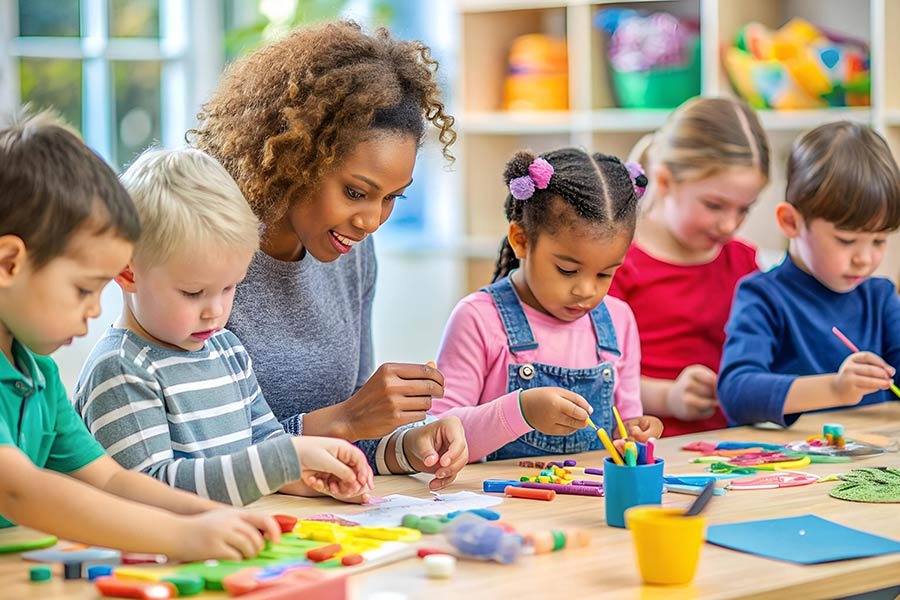
This is the part where the research meets the classroom. Our Young Preschool Care program, ages 2.5 to 3.5, is staffed at a 1:4 teacher-to-child ratio. California's licensing rules set that ratio as a minimum, and we treat it that way: a floor, not a target, so children get more one-on-one attention than the state requires rather than exactly what it requires.
Every teacher in the classroom holds a CDA credential or an equivalent California qualification, along with CPR and First Aid certification before they're ever alone with children. The curriculum itself draws on play-based learning, Montessori-inspired methods, and STEAM principles inside a family-style environment. We're upfront that this isn't a formally certified Montessori program. What we've built borrows ideas from that approach and blends them with our own.
Language is part of daily life here too. Weekly Armenian language instruction runs through both Toddler Care and Young Preschool Care, tied directly to why Strong Roots exists in the first place: our founding philosophy holds that most Armenian-American children lose active fluency by around age seven, which makes the preschool years a critical window for building that foundation while it's still forming.
Strong Roots was founded in 2022 by Director Narine Mazmanyan, who trained in psychology and pedagogy at the Pedagogical Institute of Armenia and in medicine at Armenian State Medical College, with further study at LA ORT College and Marian College here in the U.S. You can read more about her background on our About Us page. That mixed background, education and medical training together, shapes how the school thinks about both learning and physical safety day to day.
We're located at 9054 Darby Ave, Northridge, CA 91325, in the San Fernando Valley near CSUN, licensed as a CCRC facility under license #195700760. We operate Monday through Friday, and every child in Young Preschool Care gets three meals and snacks daily as part of the regular schedule.
If your two-year-old is starting to outgrow the toddler room but isn't quite ready for a full preschool classroom, this is the program built for exactly that stretch. It's worth a visit to see the classroom in person before deciding.
Strong Roots named this in-between stage on purpose. "Toddler" and "preschool" are both real categories, but neither one describes a child who is exploding with new language, testing every limit in the room, and craving independence all at once. The Twaddler name is our way of saying we see that stage clearly, and Young Preschool Care is the program built to match it: the same 1:4 ratio, the same credentialed teachers, and the same gradual, comfort-object-friendly transition process described above, applied to real classrooms at 9054 Darby Ave. It's what makes this a 2-year-old transition program in practice, not just in name.
How Do I Enroll My 2-Year-Old at Strong Roots in Northridge?
Getting started is straightforward. Reach out by phone at (323) 990-8181 or by email at info@strongrootspreschool.com to ask questions or check availability. From there, most families schedule a tour of the classroom, so you can see the space, meet the teachers, and get a feel for daily routines before committing to anything.
During that visit, ask whatever is on your mind: how the classroom handles the toddler-to-preschool transition, how meltdowns get handled day to day, what a typical morning looks like. Once you're ready to move forward, our team walks you through the paperwork and gets your child's start date on the calendar. If your two-year-old is ready for their own Twaddler Transition, we'd love to show you the classroom.