





Play-Based vs. Academic Preschool: Which Philosophy Is Right for Your Child?
Standing in a preschool lobby holding two brochures, one built around block corners and dress-up bins, the other built around letter drills and workbook pages, is usually where the play-based vs. academic preschool question actually gets asked. The honest answer, based on research that has directly compared the two models, is that neither one wins outright. A landmark study found real academic gains for academically-directed classrooms in the short term that reversed within two years. Separate research on the "fade-out effect" shows that early academic advantages, wherever they came from, tend to close by around third grade. This article walks through what that research actually found, offers a practical way to test which approach fits your own child, and shows how Strong Roots Preschool in Northridge, CA builds a program that borrows from both rather than picking a side.
What Is Play-Based Preschool, and What Is Academic Preschool?
Play-based and academic preschool are two different answers to the same question: how should a three- or four-year-old spend the hours before kindergarten? Most real programs sit somewhere between the two, but defining the two poles clearly first makes the outcome research below easier to follow. Parents searching for a clean play-based vs. academic preschool comparison usually want to know which pole their local options actually resemble before they ever book a tour.
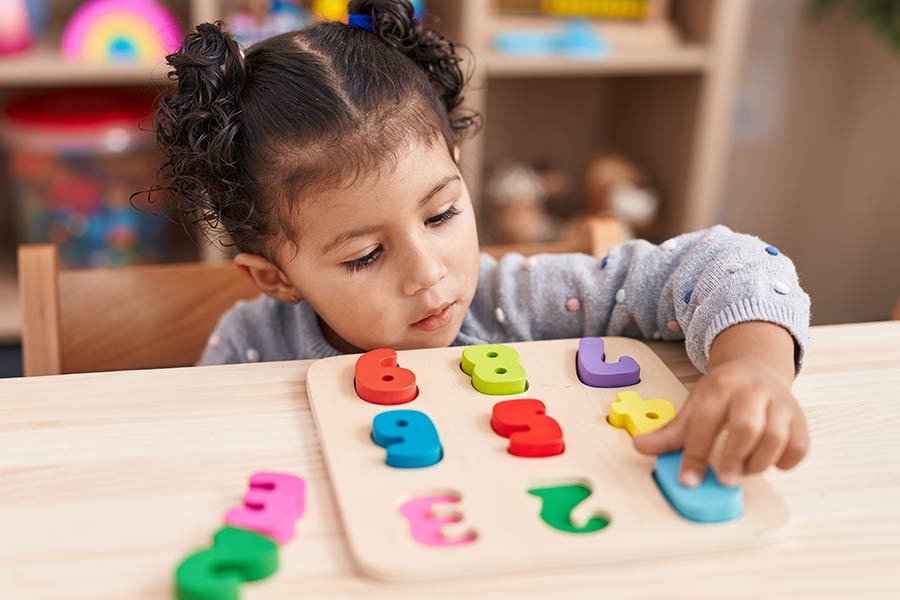
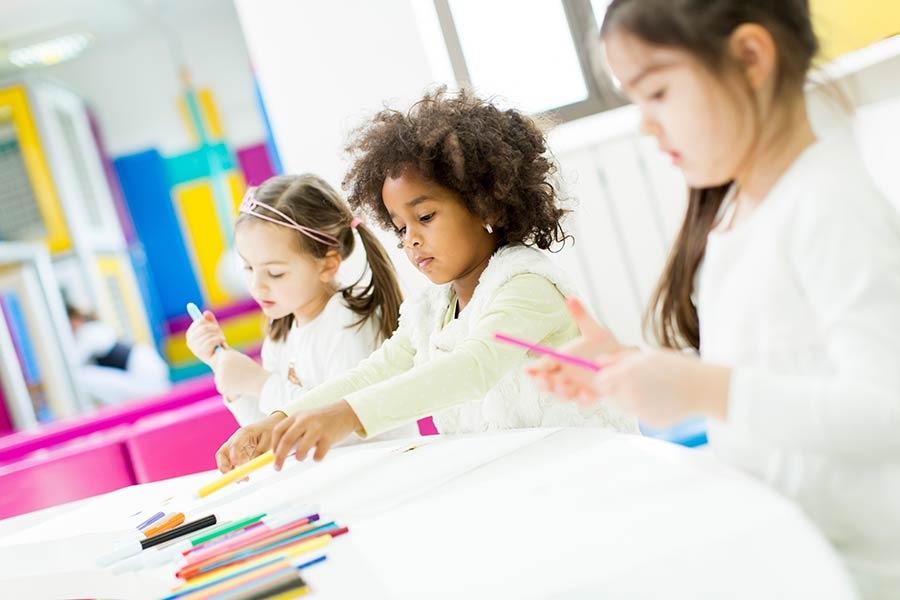
In a play-based classroom, children choose activities that match their current interests inside distinct learning areas, a kitchen corner, a science table, a water table, a reading nook, a block zone. Teachers act as facilitators rather than instructors, stepping in to extend social skills and vocabulary as children play rather than directing the activity from the front of the room. PBS KIDS for Parents quotes author Jenifer Wana on this point: "even though it seems like they are just playing, they are learning" social cooperation, early literacy concepts, and math foundations along the way.
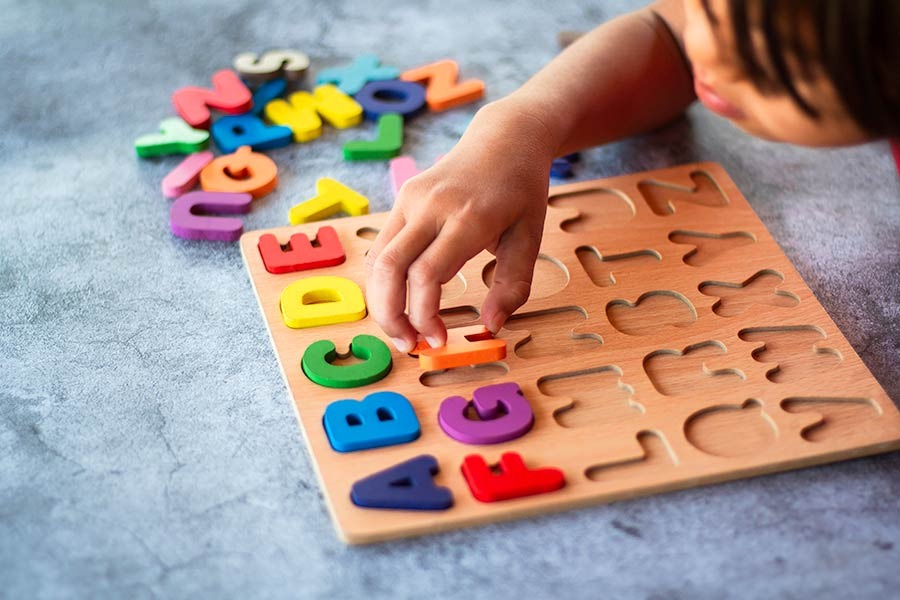
An academic preschool, by contrast, runs on teacher-directed or teacher-managed lessons. Educators plan structured activities around letters, sounds, shapes, colors, and time concepts, aimed squarely at kindergarten entry requirements. Worksheets and drills show up more often, vocabulary building leans structured rather than incidental, and the day tends to follow a set routine rather than child-led choice. Stay at Home Educator's Sarah Punkoney frames the contrast in terms of what gets measured: academic programs assess progress through worksheets and completed tasks, while play-based programs assess progress through teacher observation of a child's process rather than a finished worksheet. Both models can be run well or run poorly. The research that follows compares them at their most common form, not their best or worst-case version.
Philosophy is also only one piece of a bigger play-based vs. academic preschool decision. PBS KIDS notes that parents evaluating any preschool, play-based or academic, should also weigh cost, location, schedule, accreditation, teacher qualifications, safety protocols, and discipline approach alongside the educational model itself. A program can nail the philosophy question and still be a poor fit if the schedule doesn't match a family's work hours or the discipline approach doesn't match a parent's values. Philosophy is the piece this article focuses on, but it isn't the only piece of the decision.
What Does the Research Say When the Two Models Go Head-to-Head?
The most direct comparison available on the play-based vs. academic preschool question comes from a single study, and it deserves an honest reading rather than a headline. Dr. Rebecca Marcon's 2002 study, "Moving Up the Grades," published in Early Childhood Research & Practice, tracked children from an urban public school district who had attended one of three preschool models: Child-Initiated (33% of the sample), Academically Directed (35%), or a Combination approach (32%).
At the Grade 3 follow-up (160 children across 61 schools), there was no significant GPA difference across the three groups. Special education placement sat under 1%. On paper, at that point, the philosophy a child attended didn't seem to matter much.
By Grade 4 (183 children across 70 schools), the picture shifted. The Child-Initiated group's GPA ran about 14% higher than the Academically Directed group's. Special education referrals climbed to 8% of the sample overall, up from under 1% the year before. Students from the Academically Directed model showed declining performance across most subject areas, a reversal from the flat result seen just one year earlier.
Separately, the Combination group, roughly a third of Marcon's sample, wasn't the headline finding in either direction. It didn't post the sharp Grade 4 GPA gain the Child-Initiated group did, and it didn't show the decline the Academically Directed group did either. That's a small, quiet data point in favor of a blended model, not proof of one, but it lines up with where this article ends up.
Two caveats matter here, and skipping either one would misrepresent the study. First, the sample was specific: 96?rican American, 75% qualifying for subsidized school lunch, 73% from single-parent households, all within one urban school district. That is not a stand-in for every family reading this, and Marcon's own paper doesn't claim it is. Second, other researchers pushed back. Commentary published in the same ECRP volume, including from Lonigan, questioned Marcon's data analysis and argued the later-grade reversal wasn't as firmly established by the study's design as the headline number suggests. Read the Grade 4 gap as real, documented, directional evidence, not as settled proof that academic preschool damages a child's GPA.
Does an Academic Preschool Advantage Actually Last?
Often, no, and this is where a second body of research relevant to the play-based vs. academic preschool question becomes important, separate from Marcon's study. Researchers at Stanford's Center for Education Policy Analysis (CEPA), covered in Ed Week's reporting on the topic, describe what's known as the preschool "fade-out effect": children who attend preschool, including academically-focused programs, typically start kindergarten with a measurable edge over peers who didn't attend, but that edge usually closes by around third grade.
CEPA's researchers point to three possible reasons this happens. Preschool instruction may not build the specific skills that go on to support later learning on their own. The quality of a child's later schooling can matter more than the size of the initial preschool boost. And kindergarten teachers often re-teach material a child has already mastered rather than building on top of it, which flattens the earlier advantage instead of extending it.
One point needs stating plainly, because it gets lost easily: researchers behind this work do not treat fade-out as evidence against preschool itself. Preschool attendance still produces real social and economic returns over time. The fade-out effect concerns a narrower claim, whether an early academic edge specifically holds up, not whether preschool is worth attending in the first place. Stay at Home Educator's Sarah Punkoney reports a version of the same pattern from a different angle: children in academic-based preschool programs often score higher than peers on kindergarten standardized tests, but that gap closes for most children by the end of kindergarten itself.
Put Marcon's data next to the fade-out research and a pattern starts to form, even though the two came from separate studies with separate methods. Marcon found the Academically Directed group losing ground by Grade 4 in one specific district. The fade-out research finds academic gains from any preschool model typically leveling out by around third grade, for different, more general reasons. One study doesn't prove the other, but both point in the same direction: treating early academic drilling as a lasting edge is a shakier bet than the marketing around it usually suggests.
Does Play-Based Learning Prepare Kids for Kindergarten?
Kindergarten teachers, according to the same PBS KIDS reporting on Dr. Pianta and Jenifer Wana, tend to care less about whether a child can already recite letters and more about whether that child can function inside a classroom. Teachers report valuing students who "enjoy learning, have a set of experiences that got them used to a classroom setting, and know how to engage" with both peers and adults. Those are exactly the habits a well-run play-based classroom practices daily: taking turns, negotiating who gets the block tower next, sitting through a group story, recovering from a small disappointment.
That doesn't settle the play-based vs. academic preschool question on its own either; play-based preschool is not a guaranteed shortcut to kindergarten readiness by itself. Wana cautions that academic advantages hold "only up to a certain point," which cuts both directions, early letter recitation fades as the fade-out research shows, but so does the assumption that unstructured play alone builds every skill a kindergarten classroom will expect. The strongest version of either philosophy still needs some intentional design behind it; naming a philosophy doesn't guarantee that design is actually happening.
How Do You Know Which Philosophy Fits Your Child?
With the play-based vs. academic preschool research now on the table, the real question shifts from philosophy in the abstract to fit. Start by watching your child, not the brochure. Dr. Pianta's central point, via PBS KIDS, is that "choosing what's right for your child really is not as prescriptive as it could be." Even within one named approach, like Montessori, outcomes shift depending on a child's individual temperament. A quiet, methodical child might thrive with more structure than a highly social, physically active one would tolerate well, regardless of which philosophy's label is on the door.
A few concrete signs matter more during an actual classroom visit than anything a website or intake packet can tell you:
How your child reacts during a real visit. Does she gravitate toward the structured table activity or the open block area, and does she settle in or hover at the edges? A single visit, watched closely, tells you more than a mission statement ever will.
What your local kindergarten actually expects. Stay at Home Educator's framework flags this directly: your school district's kindergarten demands should factor into the decision, since a highly structured district may reward different preparation than a flexible, project-based one. Ask the elementary school your child will feed into what a typical kindergarten day looks like before ruling a preschool philosophy in or out.
Home environment and family resources. Punkoney's framework also lists parental education, resources, and family structure as relevant context, since a preschool is one piece of a child's overall preparation, not the whole picture. A child getting rich language exposure and structure at home may need less of it replicated at school, and vice versa.
Quality of implementation, not just philosophy. A poorly run academic program and a poorly run play-based program can both fail a child equally. Punkoney's research summary is explicit that implementation quality matters at least as much as which model a school claims to follow.
Organized routines without rigidity. Pianta cautions that a good program should have organized routines but shouldn't resemble a rigidly timed elementary classroom, with the day chopped into strict five- and ten-minute blocks no matter what philosophy the program follows.
If you're weighing how much of a day should be free play versus structured time rather than which named philosophy to pick, that's a related but different question. We cover the play spectrum and the research behind it in more depth in our piece on how Strong Roots balances play and learning in our Northridge classrooms, including the guided-play research that applies to that specific question.
Does Strong Roots Lean Play-Based or Academic?
Strong Roots blends play-based learning, Montessori-inspired methods, and STEAM principles across six program tracks, running from Infant Care (6 weeks to 12 months) and Toddler Care (12 to 24 months), through Young Preschool (2 to 3 years), Preschool (3 to 4 years), and Pre-K (4 to 5 years), up through an After School program serving children to roughly age 13. Rather than committing to one philosophy at the expense of the other, the program treats the play-based vs. academic preschool question as a false choice instead of a side to pick.
Strong Roots is a family-owned, independent program founded in 2022, CCRC-licensed under License #195700760, located at 9054 Darby Ave, Northridge, CA 91325, and serving families across Northridge and the wider San Fernando Valley. Founder and Director Narine Mazmanyan brings a background in psychology and pedagogy from the Pedagogical Institute of Armenia along with healthcare training from Armenian State Medical College, plus additional study at Los Angeles ORT College and Marian College, an unusual combination for a preschool leadership role. A psychology and pedagogy background informs how the school handles the social-emotional side of a blended philosophy; a healthcare background informs how it thinks about the physical side, nutrition, rest, and physical development that both sides of the play-based vs. academic preschool research treat as foundational.
Alongside the core curriculum, Strong Roots pairs its program with Armenian language preservation instruction, giving children a second active channel for the same literacy and language development both play-based and academic philosophies care about, just built through a heritage language rather than English alone. For a deeper look at the underlying developmental philosophy behind this structure, including why physical, cognitive, social-emotional, and language growth are treated as one connected system rather than separate subjects, see our companion piece on our whole-child development approach.
Can a Preschool Program Blend Both Approaches?
Yes, and the research above on the play-based vs. academic preschool question backs a blended structure over a strict either/or pick. Punkoney's own conclusion at Stay at Home Educator recommends maintaining "short times of structured (and teacher directed) learning activities in addition to valuable play experiences," building both academic competency and social-emotional resilience side by side. That is functionally the model Strong Roots already runs: circle time and directed lessons folded in alongside open-ended play, gardening, cooking activities, and STEAM projects, rather than a day split cleanly into "the academic part" and "the play part."
Framed against the head-to-head research, a blended model sidesteps the specific risk Marcon's data raised (a heavy academic emphasis correlating with a Grade 4 decline in one specific sample) without abandoning the structure that helps some children, particularly ones headed into a more traditional kindergarten classroom, feel prepared. It also sidesteps the fade-out concern, since the goal isn't to front-load recitation skills that may not carry forward, but to build the classroom habits, engagement, and social comfort that kindergarten teachers say actually stick.
In practice, a blended day at Strong Roots might open with circle time and a directed group lesson, move into hands-on STEAM stations built around gardening beds or a cooking activity, and close with open-ended outdoor play, all inside the same morning. A gardening bed becomes a lesson in plant life cycles when a teacher asks the right question at the right moment; a cooking activity becomes a lesson in measurement and sequencing the same way. Each piece pulls its own weight instead of standing in as filler for the other.