







What Makes a Great Preschool? Inside Strong Roots' Northridge Program
If you're touring preschools in the San Fernando Valley right now, you already know the marketing copy all sounds the same. Every website promises "nurturing environments" and "passionate educators." What actually separates a great preschool from an average one comes down to a handful of concrete things: who's teaching your child, how many kids that teacher is responsible for, what the daily schedule actually looks like, and whether the state has verified the place is safe. This is what those things look like inside Strong Roots Preschool's Northridge program, and how they line up against what early childhood researchers actually recommend.
What does "high-quality" actually mean for a preschool?
High-quality doesn't mean the fanciest building or the longest brochure. The National Association for the Education of Young Children (NAEYC) built its accreditation system around ten standards, and they boil down to a short list: positive relationships between children and adults, a curriculum that supports real learning, teaching methods matched to how young children actually develop, ongoing assessment done in partnership with families, health and nutrition support, qualified teaching staff, genuine family partnerships, ties to the surrounding community, a safe physical environment, and management that keeps all of that running consistently. Read the full list on NAEYC's program standards page. Taken together, these standards are close to an industry definition of a great preschool.
Other researchers land on similar ground from different angles. The Hechinger Report's breakdown of five elements of a good preschool points to classroom design, teacher quality, how discipline is handled, how academics get taught, and physical safety. Bloom Learning Centre's list of six features adds parent communication and daily wellness routines to the mix. Line all of it up and one thing becomes obvious: what makes a great preschool isn't one single feature. It's whether the curriculum, the staff, the ratios, and the safety systems all hold up under a closer look, together.
What does a strong preschool curriculum look like?
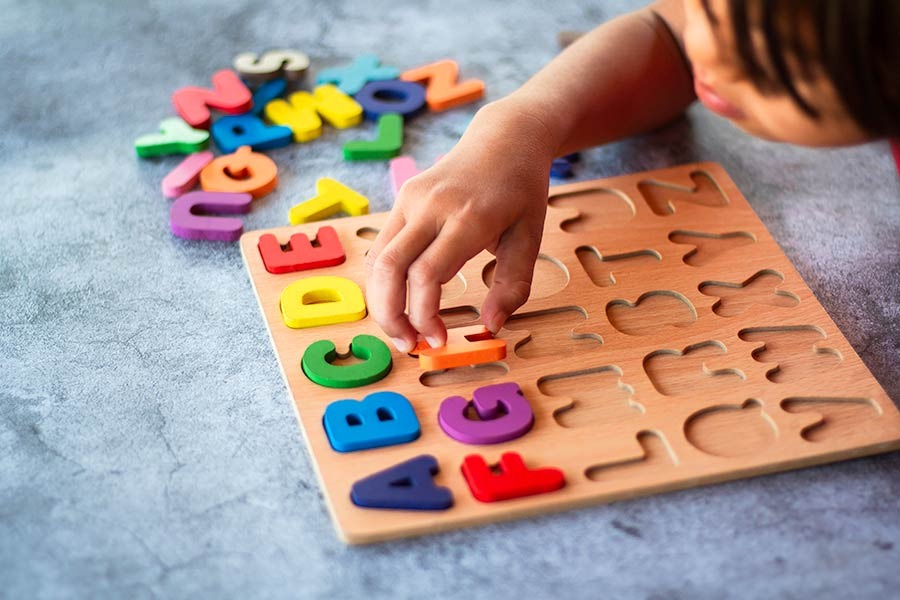
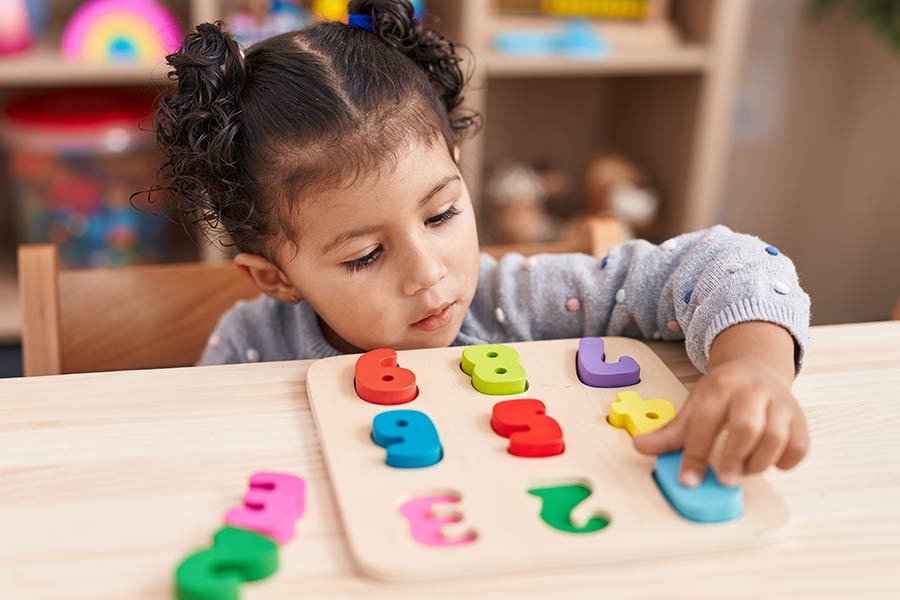
A strong curriculum treats play and academics as partners, not opposites. Kids in a good program spend real time exploring pattern blocks, listening to stories, building things, and solving puzzles, activities that quietly teach reading readiness, early math, and problem-solving without ever feeling like a worksheet. That's the "academics through discovery" model Hechinger describes, and it's the same balance Bloom Learning Centre points to when it talks about programs that address cognitive, emotional, social, and physical growth all at once instead of pushing academics alone. This balance is one of the clearest signs of a great preschool curriculum in practice.
At Strong Roots' Northridge campus, that balance shows up as a blended approach: play-based learning combined with STEAM principles and Montessori-inspired methods. The daily rhythm includes a morning circle, structured activity blocks, outdoor play, language enrichment, meals, and rest time, so kids get both the free exploration young children need and the structure that helps a classroom actually function.
How does play-based learning fit with structured academics?
It fits because young children learn concepts fastest when they're moving, building, and touching things, not sitting still and listening. Bloom Learning Centre frames this as avoiding academic pressure while still hitting real developmental goals, and Friends Central's guide to preschool quality makes nearly the same point when it lists arts and crafts, music, dance, and outdoor exploration as the backbone of active learning. A single day at Strong Roots reflects that same mix: circle time and language enrichment provide structure, while outdoor play and activity blocks give kids room to move and choose.
What is Montessori-inspired learning, and is it better?
Montessori-inspired classrooms let children choose activities from a set of hands-on materials, working at their own pace with a teacher who guides rather than lectures. There's actual research behind the approach. A study published in the journal Science found Montessori students outperformed peers in traditional schools on academic achievement, social skills, and executive function, including stronger self-control, working memory, and a more developed sense of fairness, according to a summary in Psychology Today's review of the evidence. That's part of why Montessori-inspired classrooms come up so often in conversations about what makes a great preschool.
One caveat worth knowing before you tour anywhere: "Montessori" isn't a trademarked or legally protected term, so any school can put it on a sign. How closely a program actually follows Montessori principles varies a lot from school to school, which is exactly why it's worth asking a program directly how its Montessori-inspired approach works day to day rather than assuming the label alone tells you anything.
What should preschool teachers bring to the classroom?
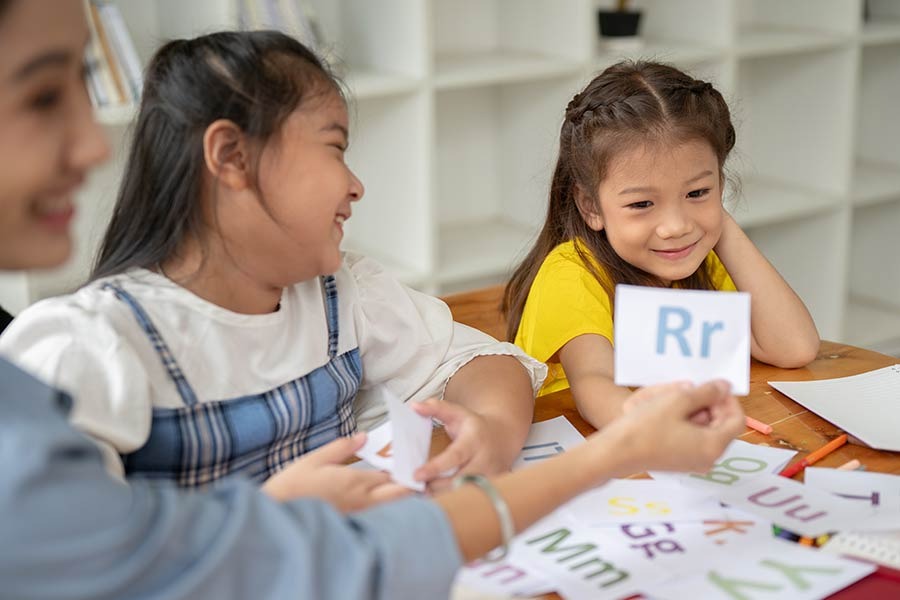
Good teachers do two jobs at once: they teach content and they help small children manage big feelings. The Hechinger Report puts it plainly, teachers should guide academic growth, model behavior, and give kids real tools for handling strong emotions, getting down to eye level, asking open-ended questions, and helping resolve conflicts instead of just shutting them down. Friends Central adds that the best teachers bring genuine enthusiasm and flexibility on top of experience, since kids notice the difference between a teacher who's just present and one who actually wants to be there. That kind of attentiveness is exactly what separates a great preschool from one that's merely adequate.
What qualifications should a preschool teacher have?
At minimum, look for specialized early childhood training and ongoing professional development, which is exactly what NAEYC's family guide recommends: staff should have specialized ECE knowledge, plus orientation when they're hired and continuing education after that. At Strong Roots, every educator holds a Child Development Associate (CDA) credential or an equivalent California qualification. All staff are CPR and First Aid certified, and the school requires background checks along with ongoing professional development. It's a concrete answer to a question a lot of parents ask on tours but don't always get a straight answer to: what training does the person watching my child actually have?
Why does staff-to-child ratio matter?
Because a teacher juggling too many kids can't give any single child real attention, no matter how skilled she is. Bloom Learning Centre calls lower ratios essential for personalized attention, the kind that helps a child feel noticed rather than managed. In California, ratios are set by the Department of Social Services and vary by age group. Strong Roots keeps its own ratios at 1:3 for infants and 1:4 for toddlers, both at or below the state's licensing caps for those age groups. That's a California-specific detail, so if you're evaluating a program outside the state, ask directly what your local licensing rules require rather than assuming these numbers transfer. It's a small number on paper, but it's one of the clearest markers of a great preschool in practice.
How does Strong Roots support emotional and social growth?
Emotional intelligence gets built the same way academic skills do: through repetition, modeling, and daily practice, not a single lesson. Bloom Learning Centre frames this as teaching kids to identify feelings, build empathy, and practice social-emotional skills so they become resilient, confident learners rather than kids who simply comply. Hechinger's research points the same direction, noting that quality programs give children tools for handling strong emotions and keep discipline focused on self-control rather than punishment, with time-outs, when used at all, kept short (three to five minutes) and corporal punishment ruled out entirely. This kind of emotional coaching shows up on nearly every list of what makes a great preschool.
Strong Roots builds that kind of practice into an ordinary day rather than treating it as a separate topic. Morning circle gives kids a predictable, shared start to the day. Activity blocks and outdoor play create natural chances for negotiation, turn-taking, and the small conflicts that teach kids how to work things out with peers. Enrichment periods, including chess, arts, and physical development, add structured opportunities for patience, focus, and cooperative play that build on what happens during free time.
What safety and licensing standards should a preschool meet?
Safety is non-negotiable, and it's also one of the easiest things to actually verify instead of just trusting a brochure. Hechinger recommends parents check for secure entry systems, safe furniture storage, current fire certifications, and documented background checks on staff, and ask directly about a school's emergency protocols rather than assuming they exist. Safety is often the most overlooked marker of a great preschool, mostly because it stays invisible until something goes wrong.
In California, licensed preschools and childcare centers are regulated by the Department of Social Services' Community Care Licensing division, which conducts unannounced inspections and keeps compliance records that families can look up. Strong Roots is licensed under this system, with license number 195700760, and its compliance history is publicly available for parents who want to check it themselves before enrolling. The Northridge campus also uses gated, age-separated outdoor play yards, so toddlers and pre-K kids aren't sharing the same open space during recess. If you're touring a preschool outside California, ask what body licenses child care in your state and how to look up a specific program's inspection history, since licensing structures and what's publicly searchable differ by state.
What makes Strong Roots' Northridge program different?
Beyond the standard curriculum-and-safety checklist, Strong Roots has one enrichment offering that's genuinely uncommon among Valley preschools: Armenian language classes, alongside enrichment in arts, Bible study, chess, math, and physical development. For families in Northridge's large Armenian community, that's not a nice-to-have, it's a way for a child's heritage language to show up in daily classroom life instead of staying confined to home. That kind of enrichment is part of what makes Strong Roots feel like a great preschool rather than just a childcare option.
The school serves a full age range under one roof: infant care starting at 6 weeks, toddler care for 12 to 24 months, young preschool for ages 2 to 3, preschool for ages 3 to 4, pre-kindergarten for ages 4 to 5, and an after-school program for kids 5 and up. Founded in 2022, Strong Roots is independent and family-owned, with classrooms grouped by age rather than mixed together, an approach that keeps activities and materials matched to what kids at each stage can actually handle.
How do I choose the right preschool for my child?
Start with reputation, but verify it in person. Friends Central's guide to preschool quality recommends checking word-of-mouth recommendations and parent social media groups first, then asking specific questions: do kids seem to genuinely enjoy attending, are the teachers experienced and warm, and how did the school handle a real crisis, like its COVID-19 response, since that tells you something about how the place is actually run under pressure. Reputation alone won't tell you whether a school is a great preschool, but it's a reasonable place to start.
From there, go see it yourself. Watch how teachers talk to the kids already in the room. Ask about curriculum philosophy, staff qualifications, and ratios, and confirm licensing status directly rather than taking a website's word for it. Then ask how the school keeps you in the loop, through conferences, written reports, apps, or something else, since communication quality tends to predict how smoothly problems get handled later on.
What should I ask on a preschool tour?
Bring a short list and actually use it. Recommended questions to ask on any preschool tour, compiled by Brightwheel's preschool tour guide, include the teaching philosophy behind the curriculum (Montessori, Reggio Emilia, play-based, or something else), how the daily schedule balances structured learning against free play, staff-to-child ratios and safety procedures, and how the school handles meals, rest, and toileting support.
It's also worth asking how staff handle separation anxiety and behavior challenges in the moment, not just in theory, and how the school communicates progress back to you, whether that's regular conferences, written reports, or something more informal. If you'd like to walk through these questions in person, Strong Roots Preschool welcomes tours of its Northridge campus at 9054 Darby Ave, and you're welcome to bring the list above.