

Preschool: A Parent's Guide to Ages, Programs, and Choosing the Right Fit
If you're trying to figure out when to start, what it actually teaches, and whether it's worth the cost, you're not alone. Preschool generally serves children ages 2 to 5, with most kids starting between 3 and 4 years old, and the right program can shape how your child handles kindergarten and beyond. Here's what the research says, how the main teaching approaches differ, and how to judge a program once you're standing in the classroom.
What age should a child start preschool?
Most children start between ages 3 and 4, and 4-year-olds make up the largest group enrolled in the US and UK. There's no strict cutoff, though. Readiness matters more than a birthday. Programs generally look for basic communication skills, some ability to handle self-care tasks, the capacity to separate from a parent without a meltdown that lasts all morning, and early signs of sharing and turn-taking.
Potty training requirements vary by program, so ask directly rather than assuming your child needs to be fully trained before enrollment. Some centers accept children still working on it; others don't. If your child isn't quite there developmentally at 3, that's not a red flag. Kids hit these markers on different timelines, and a good program will tell you honestly whether your child seems ready.
What's the difference between daycare, preschool, and pre-K?
The terms overlap, but they're not interchangeable, and the confusion is understandable given how loosely centers use them. In general industry practice, toddler care covers infants and toddlers under 2 (some centers take babies as young as six weeks). Preschool covers roughly ages 2 to 4 and focuses on social development and play-based early learning. Pre-K covers ages 4 to 5 and leans more academic, building the specific skills kids need for kindergarten. After-school programs pick up where the school day ends, serving school-age kids during out-of-school hours and holidays.
A center that runs the full continuum, toddler care through after-school, means your child can stay in one familiar environment as they grow instead of switching schools every year or two.
Is it required before kindergarten?
No. It isn't mandatory in the way kindergarten or first grade is. In 2022, 68% of 4-year-olds in the US attended some form of preschool, which also means roughly a third did not, and plenty of those kids started kindergarten just fine. Head Start, created in 1965, was the first publicly funded early learning program in the country, built specifically to give low-income families access to education they might not otherwise afford.
Whether this is right for your family really depends on your child, your schedule, and what you're trying to get out of it: academic prep, socialization, or simply reliable childcare while you work.
What do kids actually learn during the day?
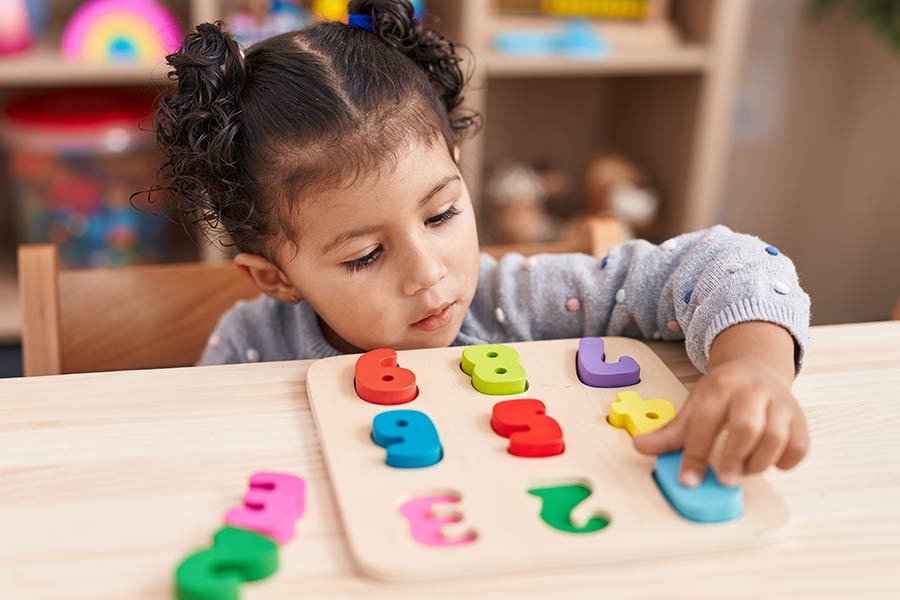
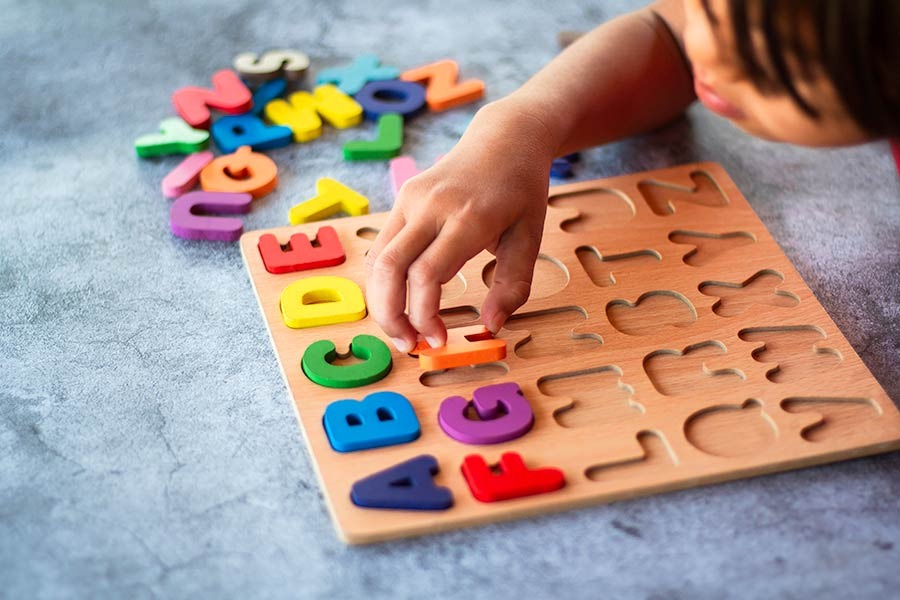
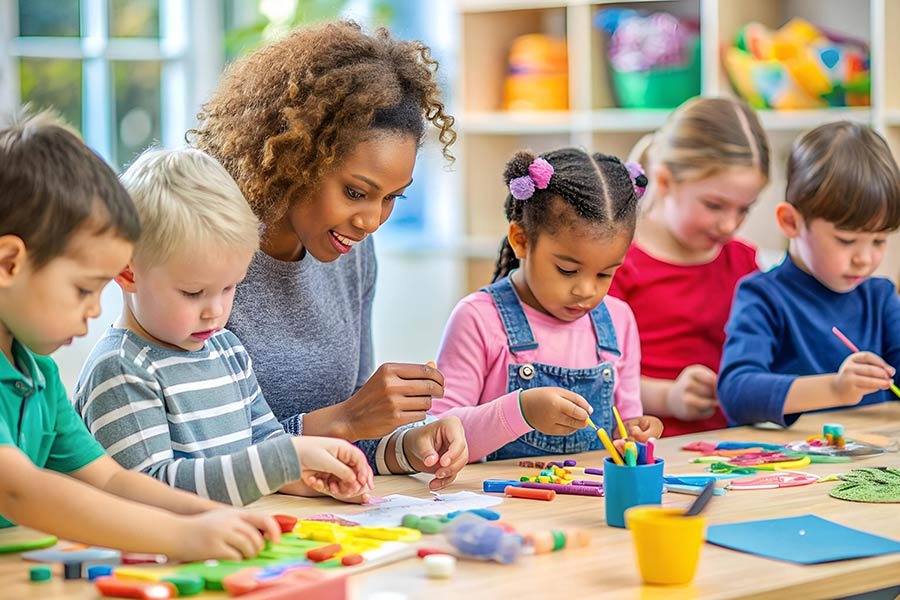
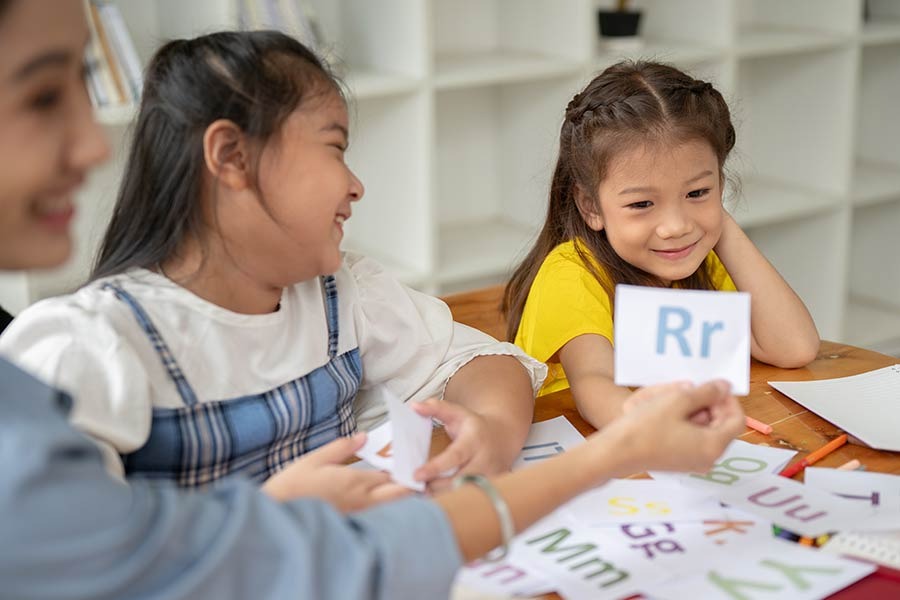
Preschool curricula generally address six developmental areas: personal, social, and emotional growth; communication, language, and literacy; math; understanding of the world around them; physical development; and creative and expressive skills. That's a broad list on paper, but in practice it plays out through everyday activities: circle time, art projects, counting games, outdoor play, and free choice centers where kids pick what interests them.
High-quality programs lean heavily on play. Early-education researchers describe play as how young children learn to take control of their own decisions and actions, not a break from "real" learning but the mechanism through which most of it happens at this age.
Montessori, Reggio Emilia, or play-based: which approach fits my child?
It depends on your child's temperament more than any one method being objectively "better." Montessori classrooms tend to be more structured, built around self-directed activities and practical-life tasks like pouring, buttoning, or sweeping. Montessori often keeps screens and tech out of the classroom and suits kids who like predictability and independence.
Reggio Emilia takes a different approach. The curriculum emerges from the children's own interests rather than following a fixed plan, and it leans harder into teamwork, art, and social learning through a mix of self-guided and peer- or adult-led play. It tends to suit kids who are creative and thrive in group settings.
Straight play-based programs work well for kids who are physically energetic and learn best through movement rather than sitting still for structured tasks. Many strong programs don't pick just one lane. They blend elements of Montessori structure, Reggio-style creative exploration, and open play, along with subject-specific activities like STEM, math, chess, and language classes, so kids get exposure to more than one way of learning.
Is it worth it? What does the research actually say?
The research here is more mixed than marketing pages usually admit. The American Psychological Association has found that kids who attend preschool tend to score higher on cognitive and language assessments. But a study out of UC Berkeley and Stanford found only a temporary boost in pre-reading and math skills, with some evidence of a negative effect on social development and cooperation. A Tennessee randomized controlled trial went further and found that pre-K attendees actually did worse than non-attendees by 6th grade. Quality varies enormously between programs, and that variation seems to matter more than whether a child attended at all.
The longest-running and most cited evidence comes from the Perry Preschool Project, which gave high-quality early education to 3- and 4-year-olds from low-income families between 1962 and 1967. Decades later, the treatment group showed higher lifetime earnings, lower rates of criminal activity, and more stable home lives than the control group. The effects didn't stop with that generation either. Their own children showed better executive function, stronger socioemotional skills, better health, and more stable households. The Economic Policy Institute has pointed to this kind of early investment as producing long-term economic returns too, through higher earnings, tax revenue, and reduced social costs down the line.
Put together, the research suggests program quality is the deciding factor, not attendance by itself. A mediocre program may not move the needle much. A genuinely strong one, especially for kids from under-resourced households, can shape outcomes for decades.
What about STEM, chess, and language learning?
These aren't just enrichment add-ons. Each has research behind it.
Math ability at this age predicts math achievement all the way through age 15, independent of a child's early reading skills or general cognitive ability, according to research published in Child Development. Separately, a controlled study found that STEM activities produced a significant improvement in problem-solving skills among 6-year-old preschoolers. Effective STEM activities identified in the research include educational robots, educational games, argumentative discussion, inquiry-based engineering tasks, drawing or talking about what engineers do, free and pretend play, and group work.
Chess shows similar results. Kindergartners who received chess instruction showed improved attention, memory, logical thinking, patience, and self-discipline, along with higher math and reading scores compared to kids who didn't. Children as young as 4 can start learning, provided the pace is slower and lessons lean on repetition and visual, story-based teaching rather than formal notation.
Bilingual or second-language learning in early childhood is linked to better problem-solving, more creativity, stronger multitasking, and better attention control compared with monolingual peers. These early years are considered a particularly receptive window for picking up the sounds and patterns of a new language, which is part of why programs that include Armenian language classes, Bible study, or other cultural and values-based instruction alongside academics can offer something a single-subject curriculum doesn't.
Physical development matters too. Climbing, jumping, and other gross motor play build the foundation for later cognitive growth, support teamwork through group activities, build self-confidence, and help with obesity prevention.
How much does preschool cost?
Average preschool cost in the US runs around $889 a month, or roughly $10,668 a year, according to a Center for American Policy analysis. Private tuition generally falls between $400 and $1,300 a month ($4,000 to $13,000 a year), and Montessori programs specifically tend to run higher, often $1,000 to $1,500 a month ($12,000 to $18,000 for the school year).
Publicly funded pre-K, where it's available, is free. This is where "universal pre-k" comes in, though the label gets used loosely. Strictly defined, a universal pre-k program is state-funded, uses age as the only eligibility requirement, is required in every district, and is funded well enough to deliver on that promise. By that strict standard, only Florida, Oklahoma, Vermont, and Washington, DC currently qualify. Illinois's Preschool for All law, signed in 2006, offers voluntary preschool to all 3- and 4-year-olds in the state, though it falls short of the 70% enrollment threshold researchers use to call a program truly universal.
If you're not in one of those areas, budgeting for tuition is worth doing early, since costs vary widely by program type and region.
How do I choose the right program?
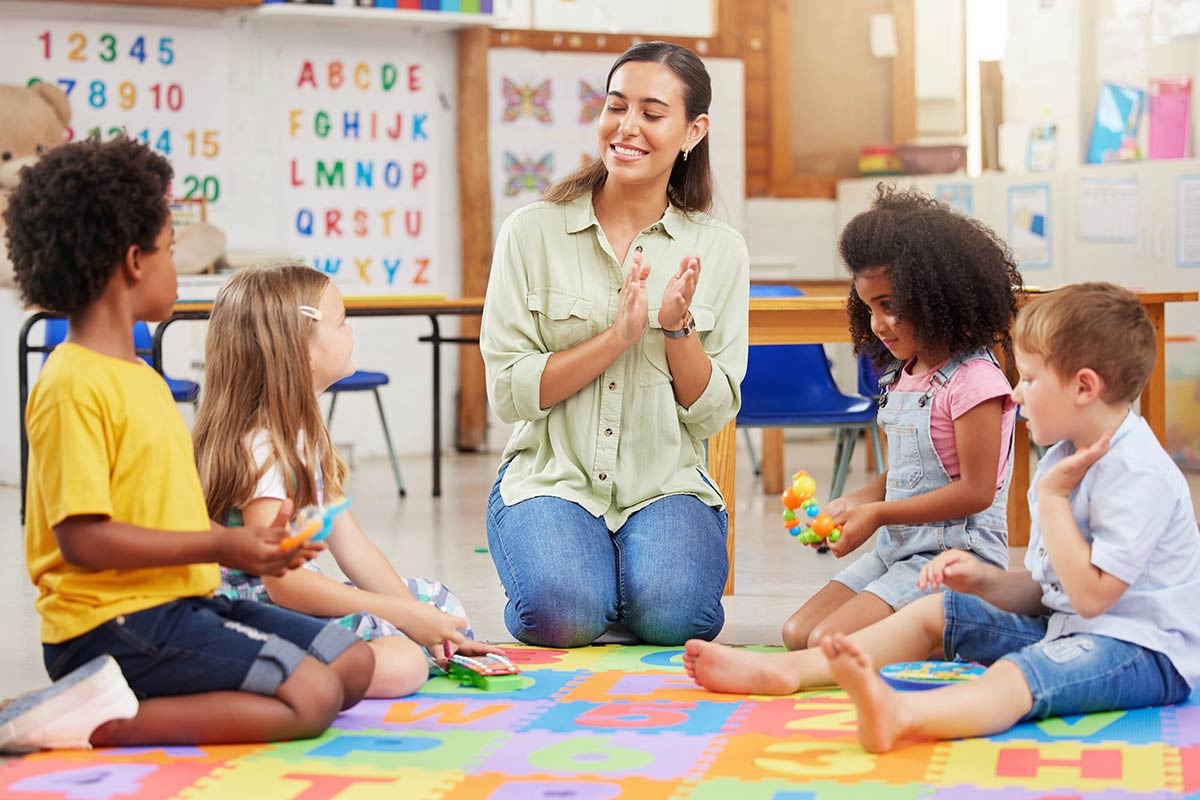
Tour in person before you decide anything. Education researchers point to a specific set of things worth watching for: how teachers actually talk to kids, whether the space is genuinely designed for young children, whether kids are choosing their own activities rather than being herded through a fixed schedule, and whether the room has activity centers and a rug rather than rows of desks facing a whiteboard.
The curriculum "brand" on the website, whether it says Montessori, Reggio Emilia, or something else, matters less than these observable details. A program that talks a great game about its philosophy but has bored kids sitting in rows isn't actually delivering it.
If you're comparing a preschool in your area against a single-approach chain, ask what's underneath the marketing: which specific approaches they draw from, what a typical day actually includes, and whether the program can grow with your child from toddler care through after-school rather than forcing a switch every year or two.
Ready to see a classroom for yourself?
The research is consistent on one point: quality is what separates a preschool that helps kids from one that doesn't, and you can only judge quality by walking through the door. Schedule a tour, watch how the teachers interact with the kids already there, and ask about the daily mix of play-based learning, academics, and enrichment your child would actually experience. Reach out to book a visit and see the classrooms and age-continuum options in person before you decide.