




Toddler Separation Anxiety Tips: What Actually Helps at Drop-Off
If your toddler cried, clung to your leg, or screamed your name as you tried to leave this morning, you are not doing anything wrong, and neither is your child. Toddler separation anxiety is one of the most common, most normal stages of early childhood, and it responds well to a handful of specific, research-backed strategies. Below are the toddler separation anxiety tips that actually hold up under pediatric research, along with a clear look at when a difficult drop-off is just a phase and when it is worth a call to your pediatrician.
What is toddler separation anxiety, and why does it happen?
Separation anxiety shows up when a baby or toddler understands that a parent still exists even after they walk out of the room, but has not yet learned that "goodbye" reliably means "see you soon." According to ZERO TO THREE, this understanding usually develops around 7 to 9 months, and it is the reason so many babies who were once fine being handed to a grandparent suddenly start sobbing at the sight of a stranger.
It is not a flaw in your parenting and it is not a sign that something is wrong with your child. ZERO TO THREE frames it plainly: babies at this age begin to understand that when a parent leaves, that parent is going somewhere else, somewhere the child cannot follow. That new understanding is a milestone, not a setback.
When does separation anxiety start, peak, and go away?
Separation anxiety typically starts around 7 to 9 months, as infants develop what psychologists call object permanence, the understanding that people and things still exist even when they are out of sight. Many toddlers go through a second, more intense wave of it around 15 to 18 months, a stretch that the American Academy of Pediatrics (via HealthyChildren.org) ties to a toddler's growing sense of independence colliding with a still-developing sense of security.
The good news for parents in the thick of it: this stage does not last forever. HealthyChildren.org notes that by around age 3, most children have a clearer grasp of what separation actually means, and daily separation anxiety rarely continues past the preschool years. That does not mean every drop-off will be easy between now and then, but it does mean the intensity you are seeing at 18 months is not a preview of what your child's whole childhood will look like.
What are the signs of separation anxiety in toddlers?
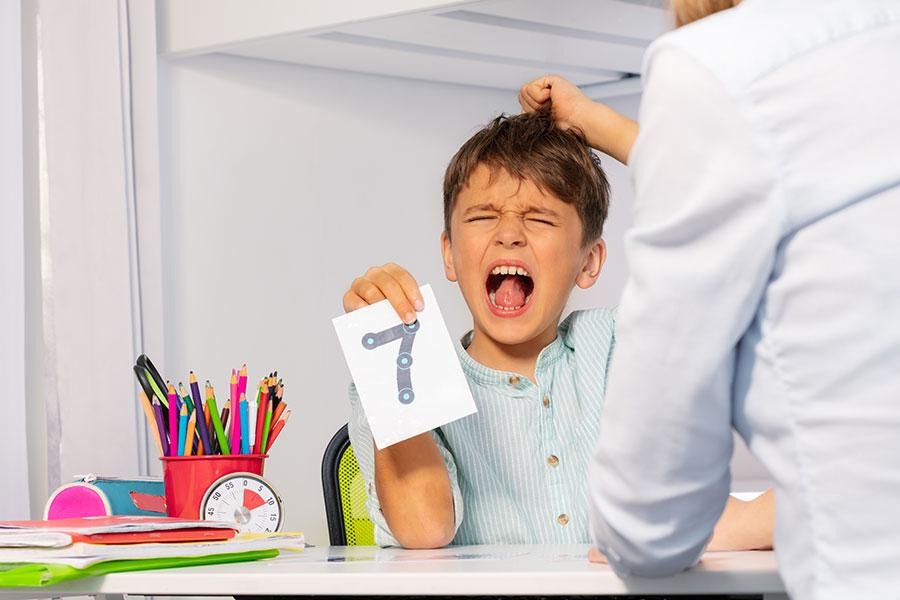
The clearest sign is exactly what you would expect: crying and clinging the moment a parent tries to leave, whether that is walking out the front door or just stepping into another room. ZERO TO THREE describes this directly, noting that a baby or toddler "may sob and cling to you when you leave the house or even disappear into another room."
What is worth remembering is that these signs almost always ease once the parent is actually gone. Teachers and caregivers see this constantly: a child who was inconsolable at the classroom door is often playing and settled within a few minutes. If you want one reassurance to carry with you on a hard morning, it is that one.
Is it bad to sneak away without saying goodbye?
Yes, and this is one of the clearest, most consistent findings in the research. ZERO TO THREE is direct about it: "Don't leave without saying goodbye. Sneaking away makes a child worry that you might leave at any time." Slipping out while your toddler is distracted might buy you a tear-free five minutes, but it teaches your child that you could disappear without warning, which tends to make the next goodbye harder, not easier.
The better approach is a short, predictable goodbye every single time, even on the days you are running late. Predictability is the whole point. A toddler who has learned that goodbye always looks the same, and is always followed by a parent coming back, has less to be anxious about than one who never knows what is coming.
What is the best goodbye ritual for a toddler?
The strategies that show up again and again across pediatric sources come down to the same core idea: give your child real attention first, then leave quickly and calmly. HealthyChildren.org recommends giving your child full attention and affection, and then saying goodbye quickly, keeping the goodbye itself "short and sweet." ZERO TO THREE recommends building an actual ritual, something as simple as a kiss and a snuggle, done the same way every time you leave.
How short should the goodbye be?
Short. Both AAP and ZERO TO THREE line up on this: a long, drawn-out goodbye tends to feed a toddler's anxiety rather than soothe it, because it signals to the child that this moment deserves that much concern. A warm hug, a quick kiss, a familiar phrase, and then you are out the door. Lingering because you feel guilty about leaving usually makes the next few minutes harder for your child, not easier.
What should I say about when I'll be back?
Skip the abstract time references. A toddler does not have a working concept of "in three hours" or "at 5:30." HealthyChildren.org recommends using time markers a toddler can actually picture, like "I'll pick you up after nap time" or "I'll see you after snack." Concrete, child-sized language gives your toddler something to hold onto instead of an abstract number that means nothing to them yet.
Do comfort objects really help with separation anxiety?
Yes, and this is one of the toddler separation anxiety tips parents underestimate. ZERO TO THREE recommends giving your child's caregiver or teacher something that reminds your toddler that you will be back, like a small blanket, a favorite toy, or even a family photo. HealthyChildren.org echoes this, recommending a special blanket or toy as your child transitions into the classroom or another caregiver's arms.
The logic is simple: a comfort object is a physical, huggable reminder that the relationship continues even when you are not standing there. It does not need to be elaborate. A well-loved stuffed animal or a small blanket that smells like home works because it is familiar, not because it is special in any objective sense.
How can I practice separations before the "real" drop-off?
Consistency is the mechanism, more than any single trick. ZERO TO THREE points to a consistent departure routine, used the same way whether you are leaving the house for an hour or dropping your toddler off at child care for the day, as one of the most effective tools available. The routine itself is what teaches your toddler that separations are survivable and predictable, not the length of any individual practice separation.
If your toddler is newer to time away from you, low-stakes separations, a short visit to a relative's house, a quick errand with a trusted sitter, give your child repeated, gentle proof that you leave and you come back. There is no need to chase a specific timer or count minutes. What matters is that the goodbye looks and feels the same every time.
Is separation anxiety a sign of an attachment problem?
No, and this is worth saying clearly because it is the opposite of what a lot of exhausted parents fear at 7 a.m. ZERO TO THREE frames separation anxiety as a sign of healthy development, not a red flag. A toddler who protests separation understands, correctly, that their parent is someone specific and important, and has developed the cognitive skill to notice when that person is gone. Children who show little to no separation anxiety are not necessarily more secure; they simply may not have reached that stage of understanding yet, or may be temperamentally different.
If anything, a toddler's tears at drop-off are evidence that the attachment worked exactly as it should.
How does a licensed toddler classroom make drop-off easier?
This is where the research meets what actually happens inside a good classroom. The strategies pediatric experts recommend (a consistent routine, a predictable goodbye, the same caregiver day after day) are hard for a busy parent to guarantee alone, but they are exactly what a well-run toddler program is built to provide every morning.
At Strong Roots Preschool's Toddler Care program in Northridge, toddlers ages 2 to 3 are cared for at a 1:4 teacher-to-toddler ratio, with CDA-credentialed teachers who greet the same children at the door morning after morning. That consistency is not a nice extra. It is the actual mechanism researchers point to when they talk about predictable caregiving easing separation anxiety: a familiar face and a familiar routine, every single day.
Strong Roots Preschool is licensed through California's Community Care Licensing Division (CDSS License #195700760), which means the ratios, staffing, and health and safety standards behind that consistency are independently regulated, not just promised. If your family is in the San Fernando Valley and mornings have been rough, scheduling a tour of the Northridge Toddler Care classroom is a low-pressure way to see that routine in action before your child's first real day.
When should I worry about my toddler's separation anxiety?
Most separation anxiety eases on its own once a consistent routine is in place, so a hard week or two at a new drop-off is not, by itself, a reason for concern. What is worth a conversation with your pediatrician is anxiety that does not ease over several weeks despite a steady routine, or intense anxiety that continues well past the preschool years and starts interfering with daily life, school, friendships, or basic functioning. That pattern can point toward something beyond typical developmental separation anxiety, and a pediatrician is the right first call, not a search engine.
To be clear, this is a general guideline, not a diagnostic checklist. Every child's timeline looks a little different, and a pediatrician who knows your child's history is better positioned than any article to say whether what you are seeing needs more attention.