


Armenian Language Preschool in Northridge: Inside Strong Roots' Weekly Cultural Enrichment Program
If you are looking for an Armenian language preschool in Northridge, here is the short version. Strong Roots Preschool runs a weekly Armenian language class as part of its regular enrichment curriculum, under a founder with an Armenian family background, and licensed under California CCRC #195700760. You do not need to speak Armenian at home to enroll, and your child does not need to be Armenian either.
That last point catches some parents off guard. Plenty of families assume a program built around a specific heritage language must be reserved for families who already share that heritage. At Strong Roots, that is not how the class works. Armenian language sits alongside chess, math, arts, STEAM, and Bible study as one of several enrichment offerings woven into the regular preschool day, and it is open to any family who wants their child exposed to it.
This article covers what the weekly class actually involves, why heritage language matters for Armenian-American and immigrant families raising kids in the San Fernando Valley, what the research says (and does not say) about bilingual development, and how enrollment works.
Most parents land here after typing some version of "Armenian preschool near me" or "bilingual daycare Northridge CA" into a search bar, usually while comparing a handful of tabs at once. The questions below are the ones that actually come up during that stage: cost, whether the program is exclusive to Armenian families, and whether a second language will set English back.
What does Strong Roots' Armenian language program actually look like?
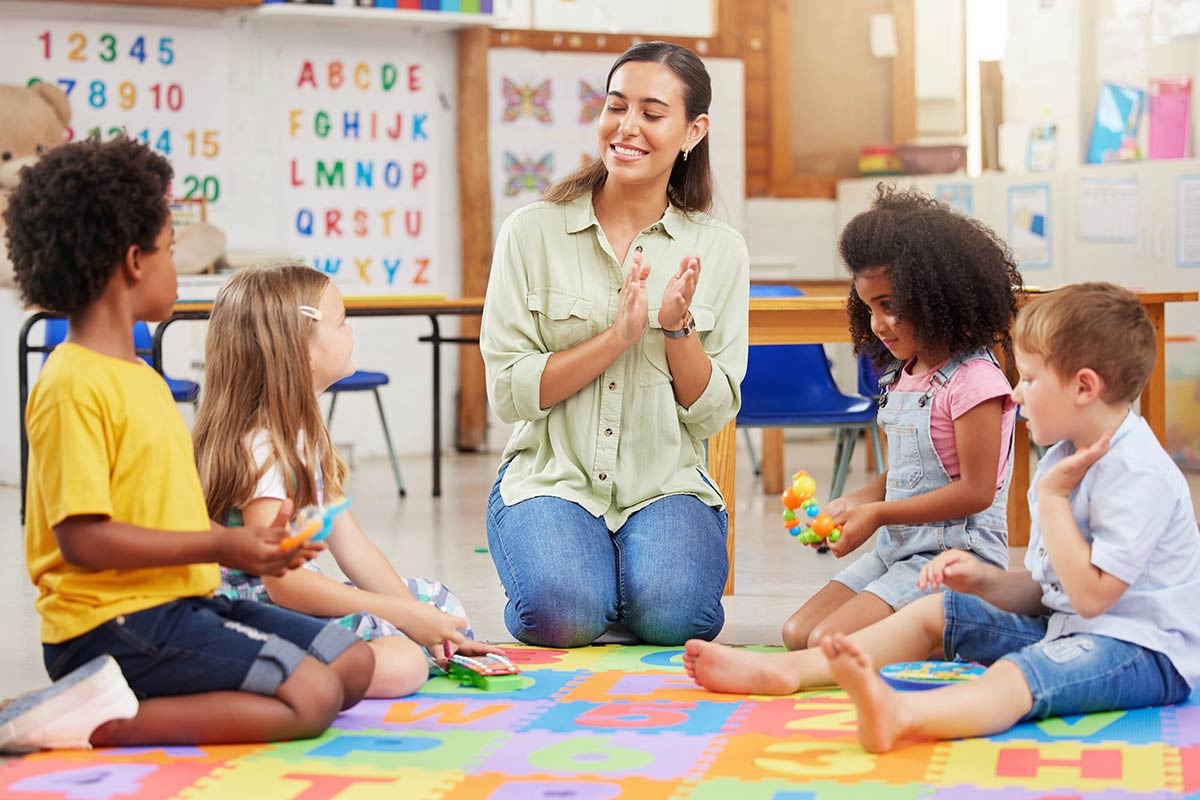
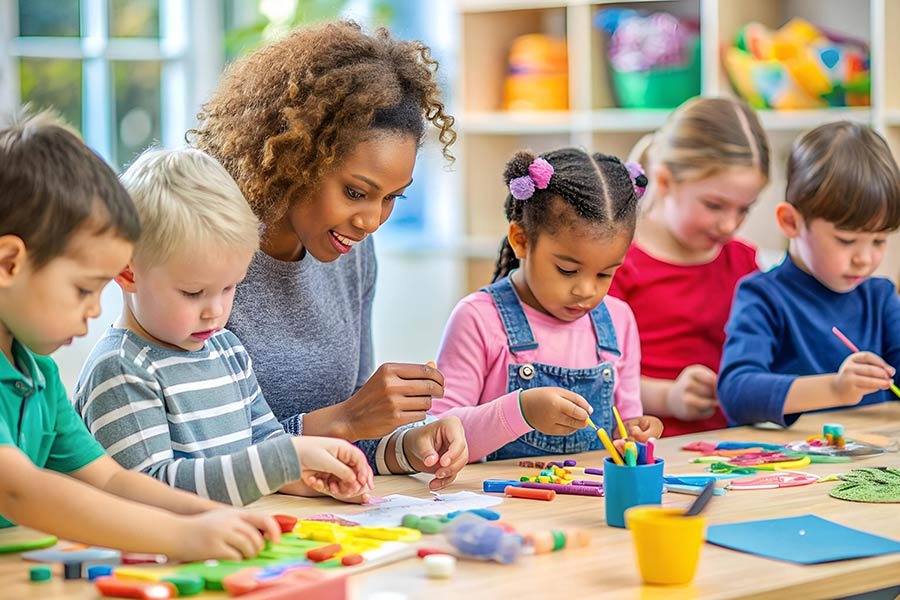
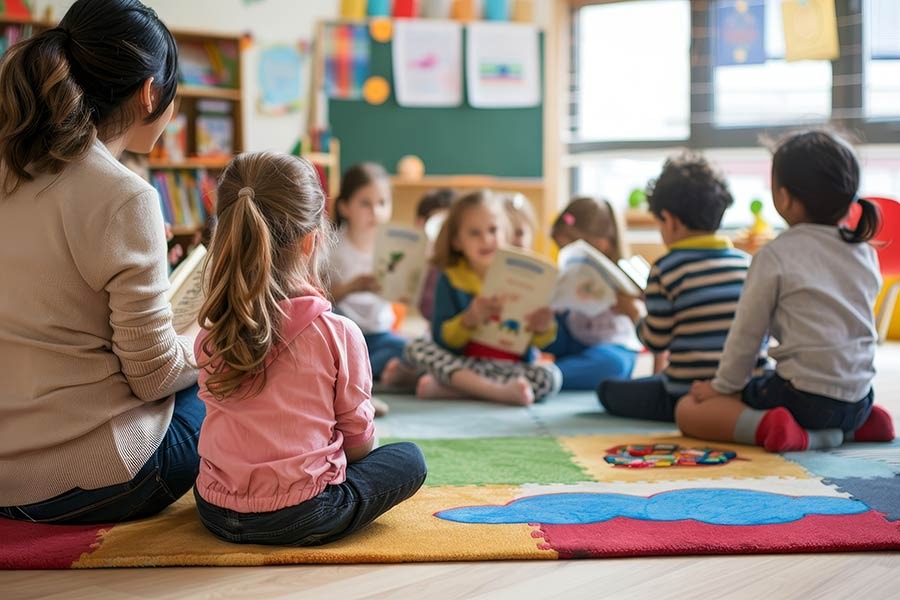
Armenian is taught as a weekly class inside the regular preschool schedule, not as a separate after-hours program. It runs the same way the school's other enrichment offerings do: chess one day, math another, arts and STEAM elsewhere in the week, and Armenian language on its own set day.
The class is led with input from founder and director Narine Mazmanyan, whose own background is Armenian. That matters for a language class aimed at preschoolers, because at this age the content has to be delivered through play, songs, and repetition rather than worksheets or drills. A three-year-old is not going to sit still for a vocabulary list. She will sit still for a song with hand motions, a story with pictures, or a craft where the teacher names the colors and shapes in Armenian while the child works.
Because the class is one piece of a broader curriculum rather than the whole day, kids get exposure without the class replacing their regular English-language instruction, socialization, and play. Parents who want more Armenian than a weekly class provides can reinforce it at home; parents who just want their child to have some exposure to the language and culture get that too, without a bigger commitment.
The Armenian class fits into a bigger weekly rhythm at Strong Roots. Kids also get regular sessions in the school's other enrichment offerings, each running on its own day much the way the Armenian class does. None of these enrichment offerings replace core preschool instruction. They sit on top of it, giving kids a different kind of engagement a few times a week instead of the same routine every day.
Why does Armenian language preservation matter for kids growing up in Northridge?
Heritage languages tend to fade fast across generations if nobody actively works to keep them alive. Research from the University of Alberta's Faculty of Rehabilitation Medicine describes a fairly consistent pattern in immigrant families: the first generation speaks the heritage language at home, the second generation understands it but defaults to the dominant language with friends and at school, and by the third generation the language is often down to a handful of phrases. The same research notes that speaking the language regularly at home and enrolling kids in a program that reinforces it are two of the more effective ways to slow that loss down.
Northridge sits inside the San Fernando Valley, home to one of the largest Armenian communities in the United States. Families here are often raising kids who hear Armenian from grandparents on weekends, at church, or at family gatherings, but who spend most of their waking hours in English. A weekly class will not replace daily exposure, but it does give kids another regular touchpoint with the language outside the home, which is exactly the kind of reinforcement the research points to.
For second- and third-generation Armenian-American kids in particular, this is less about fluency and more about connection. A child who can greet a grandparent in Armenian, recognize a few words at church, or understand what a family friend is saying at a gathering has a different relationship to that side of the family than one who cannot.
That kind of connection is hard to manufacture later. A teenager who never had early exposure to Armenian can still choose to learn it, but starting from scratch as a teenager is a very different experience than growing up with the language present, even in small weekly doses, from preschool on. Families who wait often find themselves trying to recreate in a few years what a young child could have absorbed gradually over several.
Does learning Armenian alongside English slow a child's language development?
No. This is the question that comes up most with parents new to bilingual programs, and the short answer, backed by major professional bodies, is that a second language does not cause speech or language delays. The American Speech-Language-Hearing Association, the American Academy of Pediatrics, and the Canadian Paediatric Society all hold this position. Bilingual children reach developmental milestones, such as first words and vocabulary growth, within the same expected time frames as monolingual children when you count both languages together rather than judging each one in isolation.
Parents sometimes notice their bilingual child mixing two languages in the same sentence, or going quiet for a stretch while sorting out which language to use with which person. Both are normal parts of how bilingual kids develop, not warning signs. Separate reporting on bilingual speech development backs up the same point: code-switching and occasional pauses are typical, not a red flag.
That reassurance matters here because a weekly Armenian class is a much lighter lift than raising a child fully bilingual at home. If full bilingual immersion does not delay English, a once-a-week enrichment class certainly will not.
What age is best to start heritage language learning?
Early. Most of the research on second-language acquisition points to early childhood as the window when kids pick up new languages most easily, and some studies have found that infants exposed to two languages can notice a switch between them by around six months old. The general expert consensus leans toward starting earlier rather than later, though it is far from the only window that works. If you want the deeper research on how bilingual exposure shapes a young brain, that is a bigger topic than this article can do justice to, and worth its own read.
For a preschool-age enrichment class like this one, the practical takeaway is simpler: three, four, and five-year-olds are well within the range where this kind of exposure tends to stick.
How does Strong Roots celebrate Armenian culture beyond the classroom?
The language class is not treated as an isolated subject. Strong Roots ties it to actual Armenian cultural touchpoints throughout the year, giving kids context for why the words and songs matter beyond the classroom walls.
One is Vardavar, a traditional Armenian water festival with roots going back to before Armenia's conversion to Christianity, later tied to the Christian Feast of the Transfiguration. Vardavar falls roughly 98 days after Armenian Easter, usually landing sometime between late June and early August, and it is traditionally marked by people dousing each other with water, which happens to translate well into a fun, low-stakes preschool activity.
The other is Armenian Independence Day, observed every year on September 21 to mark Armenia's 1991 declaration of independence from the Soviet Union. The U.S. Department of State has recognized the date as Armenia's national holiday, and it gives the school a natural moment each fall to talk with kids about Armenian history and identity in age-appropriate terms.
Tying the language class to real holidays instead of teaching Armenian as an abstract set of vocabulary words gives kids a reason to care about what they are learning. A word for "water" means more when it is attached to a memory of a water festival than when it sits alone on a flashcard.
How can parents reinforce Armenian language learning at home?
Parents do not need to speak fluent Armenian to reinforce what a child picks up in the weekly class. The research on heritage language loss points to home reinforcement as one of the two main levers that slow the drift toward a dominant language, and that reinforcement does not have to be formal. Playing an Armenian song from class in the car, asking a child to teach a grandparent a new word, or simply asking what they sang about that day all count.
Grandparents and extended family often end up being the strongest source of everyday Armenian exposure a child gets outside of Strong Roots, especially in families where the parents themselves grew up hearing more English than Armenian at home. Leaning on that generational connection, rather than trying to become fluent overnight, tends to be the more realistic path for busy families.
Consistency tends to matter more than intensity. A few minutes of Armenian exposure most days, through a song, a bedtime word, or a video call with family who speaks it, adds up faster over a year than occasional long pushes that fade once life gets busy.
Is the Armenian language program only for Armenian families?
Open to everyone. This is one of the most common questions Strong Roots gets, and the program works the same way the school's Bible study and other enrichment offerings do: open enrollment, with no heritage requirement and no need for prior exposure to the language.
Some families come to Strong Roots specifically because they are Armenian-American and want their kids connected to that side of their identity. Others are simply curious about giving their child early exposure to another language and culture, and Armenian happens to be the one on offer alongside the school's other enrichment classes. Both groups sit in the same weekly class, learning the same songs and vocabulary together.
What are the cognitive benefits of bilingual exposure?
There is a real body of research on how learning a second language shapes attention, memory, and problem-solving in young children, but it is a deep topic on its own, one this article is not going to try to summarize in a paragraph. What can be said with confidence, based on the same professional groups already mentioned above, is that bilingual exposure is not something parents need to treat as a tradeoff against normal development.
A full breakdown of the cognitive science, covering attention, problem-solving, and what happens in a young brain juggling two language systems, is a separate subject Strong Roots plans to cover in more depth later. For now, parents considering the weekly class do not need to wait for that research to make a decision. It is a light, low-stakes way to introduce a second language, not a program that asks a family to bet on unproven benefits.
What does an Armenian preschool program in Northridge typically cost?
Direct competition is thin. According to the childcare directory CareLuLu, only one Armenian-focused home-based daycare is currently indexed for Northridge specifically, with an average monthly cost around $740. That figure comes from a directory listing, not a full market census, so treat it as a rough reference point rather than the last word on pricing.
Zooming out to the broader Los Angeles area, CareLuLu lists 24 Armenian daycares and preschools across the city, split between home-based programs and centers, with an average monthly cost closer to $1,068. Those figures describe the general Armenian-focused childcare market in the area, not Strong Roots' own pricing. If you want current tuition and program details for Strong Roots specifically, that comes directly from the school during enrollment, not from a directory average.
What the thin local listing does suggest is that a center-based, culturally specific Armenian program in Northridge itself is not something families here have a lot of options for. Most of what shows up in searches either bundles Armenian in with several other languages at once or is based outside Northridge proper.
How does Strong Roots compare to other language programs near Northridge?
Families researching Armenian language childcare in the Northridge area will run into a couple of other names online. Little Treehouse Academy advertises five or more languages, including English, Russian, Arabic, Spanish, and Armenian, but spreads its attention across all of them rather than going deep on any single language or culture, and its site does not name specific cultural touchpoints or cite research on bilingual development. Bright Future Kids Academy runs a program that splits Armenian and Russian instruction, but the school itself is based in Granada Hills rather than Northridge, and its program description stays fairly general about cultural knowledge without naming specific traditions or events.
Neither competitor publishes an FAQ addressing the question most parents actually have, which is whether learning a second language will slow down a child's English. Strong Roots' program is smaller in scope than a five-language curriculum, but it goes deeper on one language and culture, ties it to real Armenian holidays, and is physically based in Northridge itself rather than a neighboring city.
How do I enroll my child in Strong Roots' Armenian language program?
Strong Roots operates at 9054 Darby Ave, Northridge, CA, under California CCRC license #195700760. Since the Armenian class is part of the regular enrichment schedule rather than a standalone program, enrolling in Strong Roots' preschool program is what gets your child into the weekly class, along with everything else the school offers.
The most useful first step for a parent who is still deciding is a tour. Seeing the classroom, meeting staff, and watching how a class actually runs tells you more in twenty minutes than a website can. From there, families move through the school's standard registration process to secure a spot.
If you are weighing an Armenian language preschool in Northridge against options elsewhere in the San Fernando Valley, reach out to Strong Roots Preschool directly to ask what a tour and enrollment look like for your child's age group.