









Toddler Growth Spurt: A Parent's Guide to This Explosive Stage of Growth
Your calm, predictable toddler suddenly won't leave your side, screams over a broken cracker, and wakes up three times a night after months of sleeping through. If this sounds familiar, you are probably watching a toddler growth spurt in real time, and no, you did not do anything wrong to cause it.
Between ages one and three, toddlers go through repeated bursts of physical and cognitive growth that show up as new skills, sudden mood swings, clinginess, defiance, and changes in sleep or appetite. It can feel chaotic from the outside. From the inside, it is a brain and body working overtime. This guide walks through what a toddler growth spurt actually is, why your toddler is acting the way they are, what counts as normal at this age, and how to support your child through it, including what a program like Strong Roots Preschool's Toddler Care in Northridge does day to day to help.
What Is the Toddler Growth Spurt (Explosive Stage of Growth)?
A toddler growth spurt is a stretch of rapid physical growth and cognitive development, usually lasting a few days to a couple of weeks, that tends to arrive in waves rather than as one steady climb. Toddlers grow both taller and smarter in bursts, and the two often overlap.
On the physical side, kids between one and three typically grow 7 to 8 inches and gain roughly 11 pounds, and by age three most have quadrupled their birth weight and reached close to halfway to their adult height. That is a lot of building material moving through a small body in a short window.
On the cognitive side, a toddler's brain is busy forming new neural connections and pruning the ones it doesn't need. Those cognitive leaps often show up as sudden behavior changes that have nothing to do with parenting and everything to do with a brain rewiring itself.
Common signs parents report during a toddler growth spurt include:
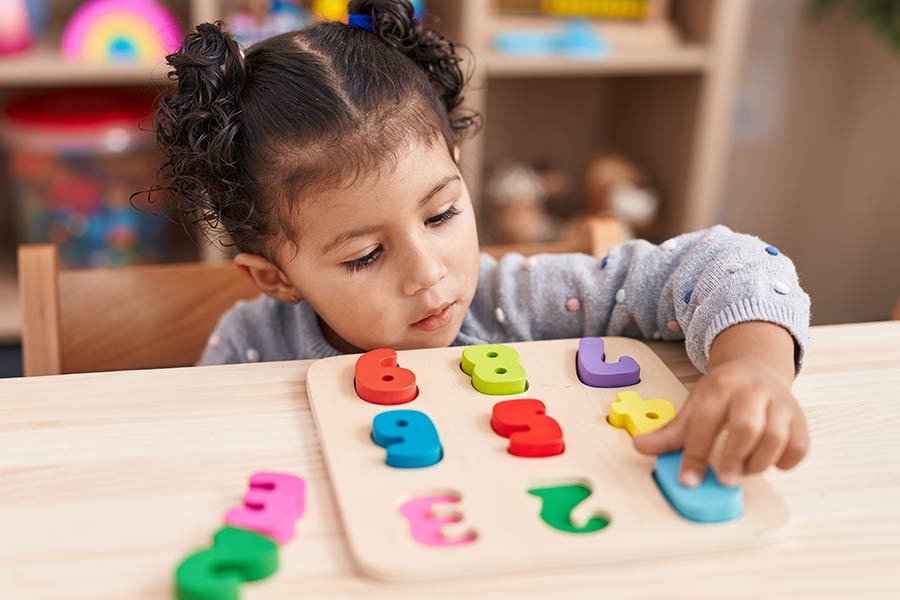
Repetitive or almost obsessive practice of a new skill, like stacking the same blocks over and over
Increased crankiness, whining, or short fuses over small things
Extreme hunger or sudden appetite changes
A temporary dip in impulse control or a previously mastered skill
Sleep disruptions such as trouble falling asleep, more night waking, or unusually long naps
Outgrowing clothes and shoes faster than expected
New clumsiness or growing pains, especially in the legs
Toddler growth spurts tend to recur roughly every six months to a year, with common clusters around 18 months, 2 years, 2.5 years, and 3 years. Most settle within days to a couple of weeks. If the changes drag on for several weeks or seem unusually severe, that is worth a conversation with your pediatrician, but a rough week or two is well within the range of normal.
What Affects How Fast My Toddler Grows?
WonderBaby points to three main influences on a toddler's growth and development: physical factors like genetics, diet, and underlying medical conditions, plus stress levels, plus the quality of the relationships around them. That last one is worth sitting with. As WonderBaby puts it, feeling loved and supported protects your child from the harmful effects of stress, which means the calm, attentive adult standing next to a toddler during a rough patch is not just comfort. It is part of what actually helps the child's development go smoothly.
What's Actually Happening in a Toddler's Brain?
Between birth and age three, a child's brain forms more than one million neural connections every second, the fastest rate of brain building your child will ever experience. This is also the window when peak sensitivity for language, hearing, and higher cognitive function is developing, which is part of why the early years matter so much for long-term learning.
Here is the part that explains almost every toddler meltdown: the parts of the brain that generate strong emotion mature well ahead of the parts responsible for self-control. Your toddler feels the full force of frustration, disappointment, or excitement long before they have the wiring to manage it. According to Zero to Three, a toddler's brain genuinely lacks the ability to put on the brakes, and real impulse control does not become developmentally available until somewhere around 3.5 to 4 years old, even if your child can recite the rule back to you word for word.
That gap between big feelings and the ability to control them is not a character flaw. It is where your toddler lives for the next couple of years, and it is exactly the stretch a toddler growth spurt tends to make more obvious.
Why Is My Toddler Suddenly So Clingy?
Sudden clinginess at drop-off or during separation is a normal, attachment-driven response at this age, and it typically eases by around age three. If your toddler who used to walk into their classroom without a backward glance is now crying, whining, or clinging at the door, that is not a step backward. It is your child's attachment system doing exactly what it is supposed to do.
According to HealthyChildren.org, the parenting site run by the American Academy of Pediatrics, separation-related tantrums, whimpering, and withdrawal at drop-off are a normal part of toddlerhood. Parenting resources also describe clinginess as a common feature specifically during toddler growth spurts and developmental leaps, when a toddler's brain and abilities are shifting quickly and the world suddenly feels less predictable.
There is a practical piece of good news here too: consistent, warm praise for the things your toddler does on their own, from putting on a shoe to handing a toy to a friend, builds the confidence and security that gradually reduces this kind of difficult behavior over time.
Why Is My Toddler Suddenly So Defiant?
Toddlers are developmentally wired to test limits, their own, yours, and the environment's, as part of normal independence-seeking. That "no" your toddler now says to everything is not a personality flaw or a sign your parenting has gone off track. It is the job description of this stage of life.
Psychologist Erik Erikson described this age, roughly 18 months to 3 years, as the "autonomy versus shame and doubt" stage. Toddlers are driven to make their own choices, what to wear, what to eat, what to play with, and to gain a sense of control over their own actions. When adults allow safe room for that exploration, children build genuine self-confidence. When correction is harsh or overly rushed, it can produce shame or self-doubt instead. That framing comes from Erikson's well-established stage theory of psychosocial development, not a single study, and it has held up as a useful lens for decades.
Is This Normal, or a Parenting Problem?
It is normal. According to HealthyChildren.org, two-year-olds are developmentally driven to test limits, their own, their caregivers', and their environment's, and when those limits are enforced, the result can be anger, tantrums, hitting, or biting. That reflects where your child is developmentally. It is not evidence of bad parenting, and it is not a sign you are doing something wrong.
What's Normal Toddler Behavior at This Age (1 to 3 Years)?
Most of what feels alarming about toddler behavior between one and three is, in fact, right on schedule. Understanding the baseline makes it much easier to tell ordinary toddler chaos apart from something worth flagging to your pediatrician.
By around 24 months, toddlers typically combine at least two words together, "more milk," "mommy up," in what is sometimes called the language explosion. On the motor side, a two-year-old commonly runs with the occasional fall, kicks a ball, walks up stairs with help, stacks a couple of blocks, scribbles with a crayon, and feeds themselves with a spoon. Socially and emotionally, two-year-olds tend to notice when someone else is hurt or upset, check a caregiver's face for reaction in new situations, play alongside other children rather than directly with them (called parallel play), and show early signs of pretend play.
Two-year-olds also show real emotional growth: openly showing affection, expressing a wider range of feelings, and resisting changes to their routine. All of that is part of normal development, even the resistance to routine changes that can make transitions feel harder than they used to be.
Is Temporary Regression Normal During a Growth Spurt?
Yes, in the sense of a brief dip, and this is worth being precise about because the word "regression" gets used two very different ways. Parenting and early-childhood resources commonly describe a short-term reversion to earlier-stage behaviors during a toddler growth spurt or big developmental leap, more clinginess, a sleep disruption, or a brief setback in a skill your child had already mastered, as a normal and typically temporary phase. If your toddler who was sleeping through the night suddenly wants you at 2 a.m. again during a toddler growth spurt week, that is the kind of regression we mean, and it almost always resolves on its own within a week or two.
That is a completely different thing from the clinical use of the word "regression," which pediatricians use to describe a genuine loss of previously mastered skills that does not bounce back and can be a red flag warranting medical evaluation. This piece is not about that kind of regression, and if you are ever unsure which one you are seeing, your pediatrician is the right person to ask, not a blog post. As a general guide, drawing on Dr. Arnold Gesell's research on alternating periods of equilibrium and disequilibrium in early childhood, if behavior changes persist for several weeks or seem severe, a pediatrician consultation is a reasonable next step.
When Do Toddler Tantrums Peak?
Toddler tantrums generally peak between 18 and 36 months and ease off as language skills and self-regulation mature, typically by around ages four to five. This pattern shows up consistently across pediatric and early-childhood sources, and it lines up with everything happening in the brain during this period: the emotional centers are online and firing well before the self-control centers have caught up.
Tantrums are not something toddlers are doing to you. According to Zero to Three, tantrums and outbursts function as a real learning opportunity. Your toddler is working out rules, limits, feelings, and self-regulation, skills that need ongoing modeling and coaching from the adults around them rather than skills that simply switch on with age. That is genuinely useful to know in the middle of a grocery store meltdown: the tantrum is the work, not a failure of the work.
How Can I Support My Toddler Through This Stage of Big Changes?
The most helpful thing you can do is stay steady while your toddler's world feels anything but. Consistent, calm limit-setting and predictable routines give toddlers a sense of safety at exactly the stage when their own ability to self-regulate is not yet reliable.
A few specific things help:
Keep daily routines (meals, naps, bedtime) as consistent as you can, especially during a toddler growth spurt week when everything else feels unpredictable.
Stay calm and present during tantrums rather than trying to reason your way out of them; your toddler's brain cannot process a logical argument mid-meltdown.
Offer small, safe choices ("blue cup or red cup?") to feed the drive for independence without opening the floodgates to total chaos.
Praise self-directed effort specifically ("You put your shoes on all by yourself!") rather than only praising the end result.
Expect more hunger, more sleep needs, and more clinginess during an active toddler growth spurt, and adjust your patience budget accordingly.
Watch for the difference between a short-term rough patch and something that lasts for weeks or feels severe, and loop in your pediatrician if you are ever unsure.
Why Do Consistent Routines and Co-Regulation Help?
Because your toddler cannot self-regulate yet, they borrow your calm. Adult modeling and coaching during a meltdown, what child development professionals call co-regulation, is how toddlers gradually learn the rules, limits, and self-regulation skills they cannot generate on their own. Every time you stay steady through a tantrum instead of matching its energy, you are giving your child's brain a working example of what regulation looks like, which is exactly what it is trying to build.
How Does Strong Roots Support Toddlers Through This Stage?
At Strong Roots Preschool in Northridge, the Toddler Care program is built around exactly this stretch of development, ages two to three, with structured daily activities, outdoor play, and three meals and snacks provided Monday through Friday.
Consistency matters most when a child's own internal regulation is still under construction, so the program leans on predictable daily rhythms rather than constant novelty. Staff maintain a 1:4 toddler ratio, which Strong Roots describes as a floor, not a target, meaning it is the minimum they hold themselves to rather than the goal they are aiming for. Every teacher holds a CDA credential or an equivalent California qualification, along with CPR and First Aid certification, before working with children.
The curriculum draws from play-based learning, Montessori-inspired methods, and STEAM principles inside a family-style environment (Strong Roots is not a formally certified Montessori program, and does not claim to be). Toddlers also get a weekly Armenian language class, tied to founder Narine Mazmanyan's observation that many Armenian-American children lose active fluency by age seven, which makes the preschool years a meaningful window for language exposure.
Mazmanyan founded Strong Roots in 2022, bringing psychology and pedagogy training from the Pedagogical Institute of Armenia, medical training from Armenian State Medical College, and further study at LA ORT College and Marian College in the United States. Strong Roots is CCRC licensed under California license #195700760.
None of this makes a toddler growth spurt disappear. What it does is give a toddler the same calm adults, the same routine, and the same limits every day, which is exactly the scaffolding a child needs while their own brain is still figuring out how to hold itself steady.
How Do I Enroll My Toddler at Strong Roots in Northridge?
If you are a Northridge or San Fernando Valley parent watching your toddler go through exactly the stage described above and wondering whether a structured, predictable program might help, Strong Roots' Toddler Care program is worth a look. You can reach the school at 9054 Darby Ave, Northridge, CA 91325, by phone at (323) 990-8181, or by email at info@strongrootspreschool.com to ask about openings, tour the classroom, or talk through where your toddler is developmentally.