







What Are the Best STEM Activities for Kids at Home?
If you're looking for STEM activities for kids at home, you probably don't need a lecture on why STEM matters. You need something to hand your kid in the next twenty minutes that uses stuff already sitting in a kitchen drawer. Below are twelve activities for ages 2 through 13, each tagged to the age range it actually fits, with a short note on why it holds attention and a flag anywhere small batteries come into play.
Skip the theory. Pick the activity that matches your child's age and start there.
Most of what's below uses things already in the house: a bowl of water, a roll of tape, a box of baking soda. A couple of activities call for something specific, like a coin-cell battery or copper foil tape, and those are flagged too.
What Counts as a STEM Activity, and Why Do Household Items Work Fine?
STEM stands for Science, Technology, Engineering, and Math, and none of those four categories require special equipment at home. A kitchen sink can teach density. A stack of blocks can teach basic physics. A recipe can teach fractions.
The activity lists that circulate online tend to lean on the same core materials, and there's a reason for that: they work. Sites like Little Bins for Little Hands and WeAreTeachers both build their most-used STEM lists around baking soda, vinegar, cardboard tubes, tape, and popsicle sticks instead of kits that need to be bought and stored. Part of that is cost. Part of it is that a kid learns just as much from figuring out how to tape three cardboard tubes into a working chute as from an instruction booklet that spells out exactly what to build.
This isn't a knock on STEM kits. Some kids love unboxing a themed set, and that's fine too. A kit just isn't required to get real value out of an afternoon of hands-on play.
Household materials also mean a parent doesn't need a science background to supervise most of this. A baking soda reaction, a sink-or-float test, or a marble run built from recycled boxes can all be set up in five minutes, then handed over so a kid can experiment, adjust, and try again on their own terms. That's the format this list sticks to below: age-tagged, low-cost STEM activities for kids at home that are doable the same day you read about them.
What Age Should Kids Start Doing STEM Activities at Home?
There's no minimum age. Toddlers explore cause and effect the moment they start stacking cups, and that counts as STEM thinking even without a named activity attached to it. If you want the research behind why toddler play already qualifies, our guide to what STEM learning for toddlers actually looks like goes deeper on that age range, and this piece on making math and science fun for preschoolers covers the 3-to-6 classroom side of it.
This article picks up where those leave off: a concrete, do-it-this-week list spanning toddlers through middle schoolers, sorted by the age band each activity tends to fit. Two age markers are worth flagging early, since they come up again in the coding section further down. ScratchJr, a coding app built for kids who can't read yet, is designed for roughly ages 5 to 7. The full version of Scratch is generally a better fit starting around age 7 or 8. Everything else on this list falls somewhere between toddler sensory play on one end and those two coding markers on the other, which is really the point of a list like this: STEM activities for kids at home don't have to wait for a certain birthday to start.
What Are the Best STEM Activities for Kids at Home, by Age?
The twelve activities below are grouped into three rough age bands: toddlers and preschoolers, elementary-age kids, and tweens. Ages overlap on purpose, since a six-year-old and an eight-year-old can often do the same activity at different paces. One activity further down uses a small battery and gets its own safety section afterward, since young children can be seriously hurt if they get hold of one.
What STEM Activities Work Best for Toddlers and Preschoolers (Ages 2-6)?
1. Sink or Float (ages 2-6). Fill a bowl or bin with water, gather a handful of household objects (a cork, a spoon, a plastic block, a coin), and have your child guess which will sink and which will float before dropping each one in. Little Bins for Little Hands and an age-group breakdown from EditorialGE both list this as a standard preschool-through-early-elementary activity. It holds up because the setup takes two minutes and a toddler can repeat it a dozen times without losing interest.
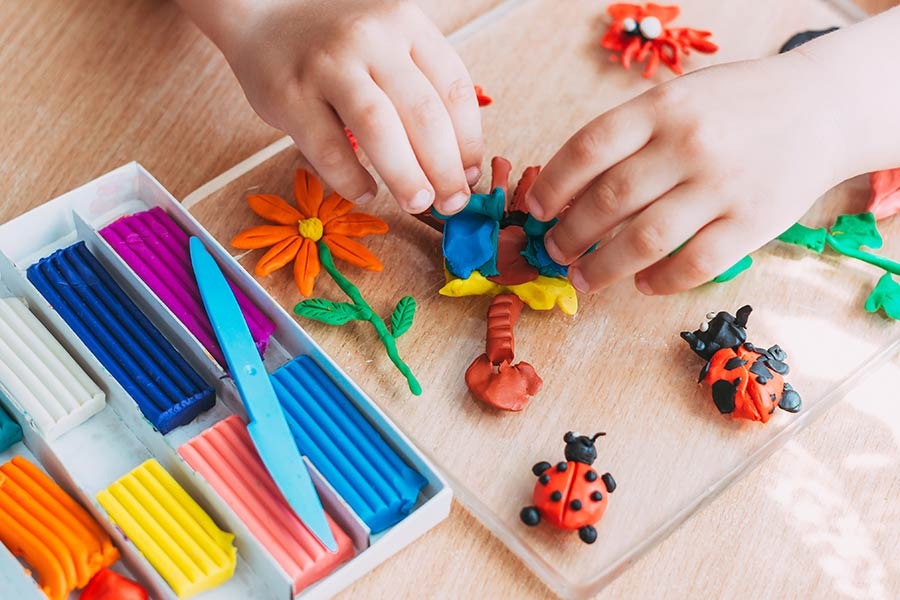
2. Baking Soda and Vinegar Volcano (ages 3-8). Mix baking soda and vinegar in a cup, a bottle, or a homemade clay volcano shape, and watch the fizzing reaction. This is one of the most commonly recommended STEM activities for kids at home across multiple lists, including Little Bins for Little Hands and WeAreTeachers, largely because it's cheap, fast, and genuinely surprising to a young kid the first several times they see it. Keep it supervised. Vinegar shouldn't get in eyes, and the reaction can overflow a small container faster than expected.
3. Color Sorting and Pattern Walk (ages 2-4). Gather household items (laundry, toy blocks, snacks on a plate) and have your toddler sort them by color or size, then take a short walk around the house or yard pointing out repeating patterns: striped shirts, tiled floors, a fence with evenly spaced posts. This one needs no special materials, just a few minutes and things already lying around, and it works well for filling a stretch of the day that would otherwise be unstructured.
What STEM Activities Work Best for Elementary-Age Kids (Ages 6-9)?
The next four STEM activities for kids at home lean into more building and more mess, which tends to suit kids who've outgrown toddler sensory play but aren't quite ready for a multi-day project.
4. Homemade Slime (ages 4-10). Mix glue, water, and an activator (liquid starch, or a saline-and-baking-soda combination) to make a stretchy, gooey substance kids can pull and mold. It's a simple, hands-on introduction to how materials change state when combined, and it's flexible enough to hold a four-year-old and a ten-year-old at the same table, just with different levels of independence during the mixing.
5. Popsicle-Stick Catapult (ages 6-10). Stack a few popsicle sticks, wrap a rubber band around one end, tape a spoon to the top stick, and launch a pom-pom or mini marshmallow at a target. Little Bins for Little Hands lists this as a standard elementary engineering activity. It's a good one for showing that pulling the spoon back farther sends the object farther, without needing to explain stored energy in those exact words.
6. Marble Run or Recycled Roller Coaster (ages 5-11). Tape cardboard tubes, pipe insulation, or other recycled materials to a wall or a large piece of cardboard, angled so a marble rolls from one section to the next, then let your kid test and adjust the angles until it makes it all the way down. WeAreTeachers and another version from Little Bins for Little Hands both feature this build. The appeal for this age group is mostly the trial and error: a marble run rarely works on the first attempt, and fixing it is most of the fun. A steeper angle near the start and a gentler slope near the end usually keeps the marble from flying off the track, a detail most kids figure out through trial rather than being told.
7. Paper Circuit Night-Light (ages 7-11, supervised). Use copper foil tape, a small LED, and a coin-cell battery to build a simple closed circuit on a folded piece of paper or a greeting card, so the LED lights up when the circuit connects. WeAreTeachers and Superspace both list versions of this as an accessible way to teach how a basic electrical circuit works, using materials that cost a few dollars total. This is the one activity here that involves a small battery. See the safety section below before setting it up.
What STEM Activities Work Best for Tweens (Ages 10-13)?
The activities that hold a tween's attention longest tend to have a real constraint attached: build it, test it, watch it fail, and try again.
8. Egg Drop Challenge (ages 7-12). Give your kid a raw egg, some recycled materials (cotton balls, bubble wrap, cardboard, tape, straws), and a challenge: build a container that protects the egg when dropped from a set height, a second-floor window or the top of a staircase both work. WeAreTeachers lists this as a widely used engineering-design activity for this age range. It's popular because it has a clear pass-or-fail result, which older kids tend to find more satisfying than an open-ended craft. If the first design cracks the egg, that's the next design brief, not a failed activity. A second attempt with the same materials, rearranged, often works better than starting from a totally new design, which is its own kind of engineering lesson.
So does pushing a catapult's aim tighter, adjusting a marble run's angles, or debugging a program that isn't doing what it's supposed to do. That last one, coding, gets its own section next, since the tool that works for a five-year-old is a poor fit for a twelve-year-old, and the reverse is just as true.
Is ScratchJr or Scratch Better for My Child's Age?
9. ScratchJr Storytelling Project (ages 5-7). ScratchJr is a free coding app built by the MIT Media Lab, Tufts University, and the Playful Invention Company, designed for kids who can't read or type fluently yet. Kids snap together graphical blocks, picture icons instead of typed commands, to make characters move, jump, and talk, building a simple interactive story or game on an iPad or Android tablet. A guide from Codingal notes that the app's whole design is built around removing the reading barrier that would otherwise keep a five- or six-year-old out of coding.
10. Scratch Coding Project (ages 8-13). The full version of Scratch, also free and run as a nonprofit by MIT, uses the same drag-and-drop block idea but supports far more complex projects: animations, multi-level games, and programs with variables and conditional logic. An age guide from itsmybot.com generally recommends starting around age 7 or 8, since Scratch still uses blocks instead of typed syntax, which removes the friction that often slows a kid down when first trying a text-based language like Python.
The short answer: ScratchJr for a child who isn't reading fluently yet, roughly 5 to 7, and Scratch once they're comfortable reading and ready for more complex projects, roughly 8 and up. Both are screen-based, and if that raises the screen-time question, current AAP guidance has moved away from a strict hourly cap for school-age kids and toward a broader framework sometimes called the "5 Cs": the child, the content, whether they stay calm, whether screen use is crowding out sleep or play, and whether there's real communication happening around it rather than passive scrolling, according to a summary from CHOC. A labeled coding app isn't automatically better than an unplugged activity just because of the label. Either way, coding belongs on this list of STEM activities for kids at home right alongside the popsicle-stick catapult and the marble run.
What Household Items Do I Already Have for STEM Activities?
Between the activities above, the shopping list is short: baking soda, vinegar, a bowl for water, tape, popsicle sticks, rubber bands, cardboard tubes, and, for the paper circuit, copper foil tape, a small LED, and a coin-cell battery. Two more STEM activities for kids at home use categories of things you already have: your kitchen and your yard. Neither of the last two needs anything from the paper circuit's shopping list, which makes them a good fallback for a day when the copper tape and coin-cell battery haven't been picked up yet.
11. Cooking and Baking Measurement (ages 4-12). Let your kid measure ingredients, level off a cup of flour, count tablespoons, or help halve or double a recipe. This works across a wide age range because the math scales with the kid. A four-year-old can pour a pre-measured cup into a bowl, while a ten-year-old can work out what half of three-quarters of a cup actually is. It's one of the few STEM activities for kids at home that doubles as dinner prep, so it tends to survive busy weeks better than activities that need dedicated setup time.
12. Backyard Nature Observation Log (ages 4-13). Give your kid a notebook and have them track something over a week or two: how tall a plant in the yard gets, what the weather looked like each day, or which bugs show up near the same spot outside. Younger kids can draw what they see; older kids can add measurements or simple counts. It doesn't need a science-fair structure to count as real observation and data tracking, and it's easy to keep going for weeks since it only takes a minute or two a day.
Are Any of These Activities Unsafe for Younger Siblings?
The paper circuit activity (#7) is the one that needs a real safety flag, because of the coin-cell battery it uses. Coin-cell and button batteries are a documented choking and internal-injury hazard for young children. If a child swallows one, it can cause a chemical burn to the esophagus within hours, according to the U.S. Consumer Product Safety Commission. The CPSC approved a mandatory federal safety standard requiring secure battery compartments and ingestion-hazard warning labels specifically to protect children six and under, and HealthyChildren.org, published by the American Academy of Pediatrics, gives families the same warning directly.
In practice, that means the paper circuit project should stay supervised the whole time, and the loose battery shouldn't sit on a table or floor where a toddler or younger sibling could reach it, before, during, or after the activity. If you have a mixed-age group of kids working on different projects at once, a reasonable approach is to do the circuit activity at a table the younger sibling isn't at, or save it for a stretch of time when the little one is napping or otherwise occupied. That single precaution is enough to keep this list of STEM activities for kids at home safe across a mixed-age household, without needing to skip the paper circuit build entirely.
The other eleven activities on this list don't involve small batteries or magnets, so this safety note applies specifically to activity #7.
How Does Strong Roots Preschool Build STEM Into Everyday Play in Northridge?
If you're in the Northridge or San Fernando Valley area and looking for a preschool where hands-on exploration happens daily rather than as a special weekly event, Strong Roots Preschool, located at 9054 Darby Ave, Northridge, CA 91325, builds STEAM into the regular classroom routine alongside its Montessori-inspired approach, Armenian language immersion, chess, math, and arts activities.
Strong Roots serves children from six weeks old through after-school age, and the same building blocks behind this list, sorting, sink-or-float testing, block building, hands-on exploration, are already part of a typical day at the school rather than something scheduled for a single unit. The school is licensed by the California Department of Social Services under license #195700760. Strong Roots treats these kinds of STEM activities for kids at home as everyday classroom material rather than a once-a-week special event.
A lot of what's on this list works just as well on a Tuesday evening at home as it does in a classroom. What a program like Strong Roots adds is consistency: a kid who gets this kind of hands-on exploration built into their week, at school and at home, gets more chances to practice the same skills of predicting, testing, and adjusting than a kid who only sees it occasionally.
If you'd like to see what that looks like day to day, contact Strong Roots Preschool to schedule a visit to the Northridge campus. Parents can also call (323) 990-8181 to ask about scheduling a tour.