







Fun Activities to Boost Your Child's Growth and Development
If you're looking for activities to boost your child's growth and development, the best ones don't need a shopping list. An obstacle course made from couch cushions, a handful of playdough, or fifteen minutes with a picture book all count. What matters more than the toy or the price tag is which skill the activity is building: gross motor, fine motor, or cognitive and social-emotional. Sort your child's play by those three buckets and you'll cover the ground that actually matters for growth.
This guide organizes real, low-cost activities by the developmental domain they support, corrects a guideline that gets repeated wrong across a lot of parenting content online, and explains why movement and brain development are more connected than most of us realize. You'll find gross motor activities for building strength and coordination, fine motor activities for hand skills, and cognitive and social games for thinking and connection, plus a few notes on how to tell whether your child is getting enough of each.
What kinds of activities help children grow and develop?
The activities that help most are the ones that combine physical movement with a specific skill demand. Gross motor play, like running, climbing, and ball games, builds large muscle coordination and body awareness. Fine motor tasks, like drawing, cutting, and building with blocks, train the small muscles in the hand and wrist along with eye-hand coordination. Cognitive and social games, like puzzles, pretend play, and group activities, build problem-solving and communication skills.
None of these domains work in isolation. A child running an obstacle course is also solving a small physical puzzle: how to climb over this, crawl under that, land without falling. A child stacking blocks is using fine motor control and spatial reasoning at the same time. That overlap is exactly the point. Good child development activities rarely target just one skill.
Sorting activities by domain isn't about running a strict curriculum at home. It's a quick mental check for a busy week: if your child spent the whole afternoon on a screen or sitting quietly with a puzzle, gross motor play is probably the gap to fill before bed. If they've been running around outside all day, a calmer fine motor or cognitive activity in the evening balances things out. Thinking in three buckets instead of one long list of "things to do" makes it much easier to notice what's missing.
How much physical activity does my preschooler actually need?
Preschoolers need to be active throughout the day, not for one set block of time. That's a meaningful difference from what a lot of parenting articles say, and it's worth getting right.
The CDC's physical activity guidelines recommend 60 minutes or more of moderate-to-vigorous activity daily for children and adolescents ages 6 to 17. That's the number you'll see quoted most often, but it applies to school-age kids, not preschoolers. For children ages 3 to 5, the CDC's guidance is different: preschoolers should be physically active throughout the day to support healthy growth, rather than hitting one single 60-minute target.
In practice, that "throughout the day" guidance translates to something concrete. The CDC's standards for early care and education settings suggest preschoolers get 90 to 120 minutes of moderate-to-vigorous physical activity across an 8-hour day, broken into shorter bursts rather than one long session. The American Academy of Pediatrics puts the daily floor at 60 minutes of moderate-to-vigorous activity for preschoolers too, and describes running, dancing, and climbing as an important part of a young child's development.
The AAP also flags a real gap between the recommendation and what's actually happening. Research the organization cites found that children ages 3 to 5 spend more than 30% of their waking hours in sedentary activity, meaning a lot of preschoolers are falling short of what they need. The AAP notes one practical fix: outdoor play tends to generate more active movement than indoor play does, so getting outside, even for a short stretch, tends to do more than staying in.
What's the link between movement and brain development?
Movement and brain development are physically linked, not just loosely related. Sensorimotor brain networks, the systems that handle movement and physical sensation, mature earlier and faster than most other brain networks. Those same motor regions stay heavily connected to the brain's cognitive regions across a person's entire life, according to a systematic review published in Neuroscience & Biobehavioral Reviews.
That matters for a simple reason: the major fine and gross motor milestones your child hits between ages 2 and 5 happen during a window of high brain plasticity, when the brain is unusually good at forming new connections. The same research notes that early motor development does more than build strength. It lets a child independently explore their surroundings, which in turn increases social interaction and gives them more chances to communicate through gesture and eye contact before they have the words for it.
So when a toddler figures out how to climb onto a chair by herself, or a four-year-old learns to pump a swing, that's not just a physical milestone. It's feeding the same brain systems that will later handle attention, language, and problem-solving.
What gross motor activities build strength and coordination?
Gross motor activities use the large muscle groups: legs, arms, torso, and core. They build the strength, balance, and body awareness kids need before fine motor and cognitive skills can fully click into place.
What outdoor gross motor activities work for ages 2 to 5?
Obstacle courses. Set up a simple course with cushions to climb over, a tunnel to crawl through, and a line to jump along. This kind of climbing, crawling, and jumping builds coordination and body awareness, and it lines up directly with the kind of active play the AAP points to as core to healthy development at this age. Rearrange the course every few days so it stays a little unfamiliar. That's what keeps a three-year-old interested in the same three cushions for a second week in a row.
Outdoor free play and nature walks. A walk around the block, a trip to a park, or unstructured time in the backyard counts as real activity. Since outdoor play tends to produce more movement than indoor play, this is one of the simplest ways to close the activity gap the AAP describes. It doesn't need a destination. Ten minutes poking at leaves in the front yard still counts as outdoor time.
Ball games. Rolling, throwing, catching, and kicking a ball, even a soft one indoors, is moderate-to-vigorous activity that adds toward the daily target. You don't need a full game of catch. A few minutes of rolling a ball back and forth with a toddler counts, and a soft foam ball is a safer starting point indoors than anything with real weight.
Active games like tag or musical statues. Short bursts of movement spread across the day fit the "active throughout the day" pattern the CDC recommends for ages 3 to 5, rather than one scheduled block of exercise. These work especially well right before a car ride or a sit-down meal, when a few minutes of running lets some energy out before you ask for stillness.
What gross motor activities work for school-age kids, ages 6 to 13?
Older kids can handle more structured versions of the same ideas: longer bike rides, backyard soccer or basketball, jump rope, or a family hike with a real destination. The daily target for this age group is 60 minutes or more of moderate-to-vigorous activity, and it can be split across a few shorter sessions rather than done all at once. Team sports fit naturally here too, adding a social and coordination layer on top of the physical one.
What fine motor activities build hand skills and focus?
Fine motor skills use the small muscles in the hands and wrists, the ones involved in grasping objects and coordinating what the eyes see with what the hands do. They're a separate skill set from gross motor development, and they need their own dedicated practice.
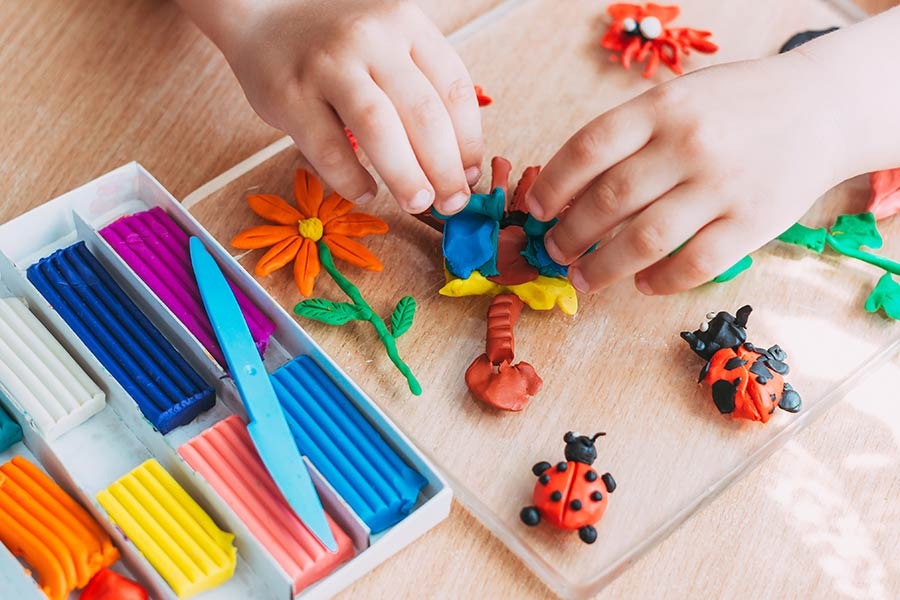
Playdough shaping and rolling. Squeezing, rolling, and pinching playdough builds hand strength and eye-hand coordination without any pressure to make something specific. Let your child squish it for its own sake. Homemade dough works fine, and letting your child help mix and knead it adds another few minutes of hand work before the actual play even starts.
Threading beads or lacing cards. Getting a bead onto a string, or a lace through a hole, takes real grasping precision and hand-eye coordination. Start with big beads and thick string for younger kids, and size down as their control improves. A shoelace and a colander with holes works just as well as a store-bought lacing card if you're improvising.
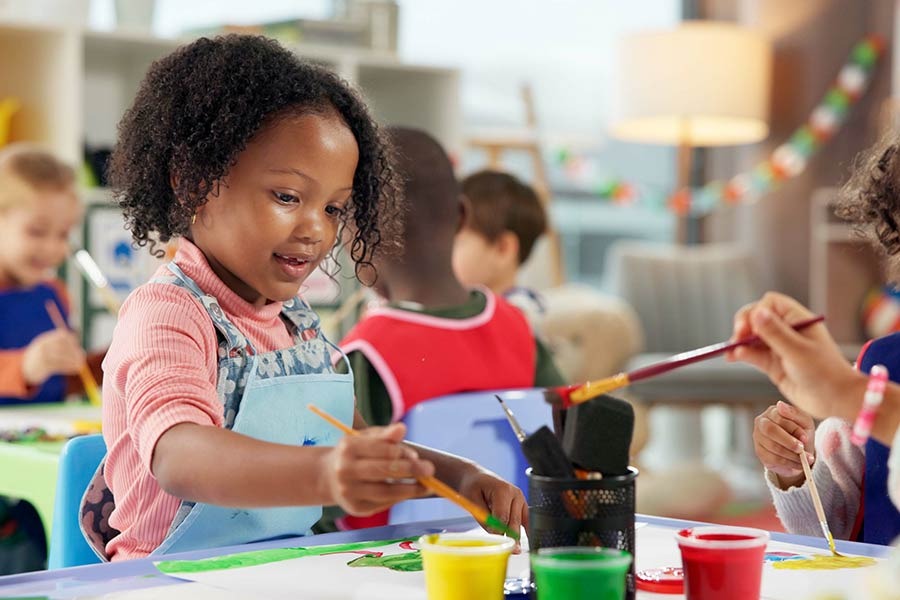
Drawing, coloring, and simple cutting. Give a preschooler child-safe scissors and some scrap paper to cut, or a crayon and a blank page. The AAP links these kinds of fine motor tasks directly to school readiness, alongside the large motor skills built through active play. Cutting straight lines on scrap paper first, before shapes, builds the control kids need for more detailed cutting later.
Fine motor practice doesn't need a set schedule. Five minutes here and there, worked into snack prep or a quiet afternoon, adds up over a week. Even letting a child help pour cereal, zip their own jacket, or peel a sticker off its backing is fine motor practice, even though it doesn't look like an activity at all.
What cognitive and social activities support whole-child growth?
Cognitive and social-emotional activities build the thinking, problem-solving, and connection skills that run alongside physical development, not instead of it.
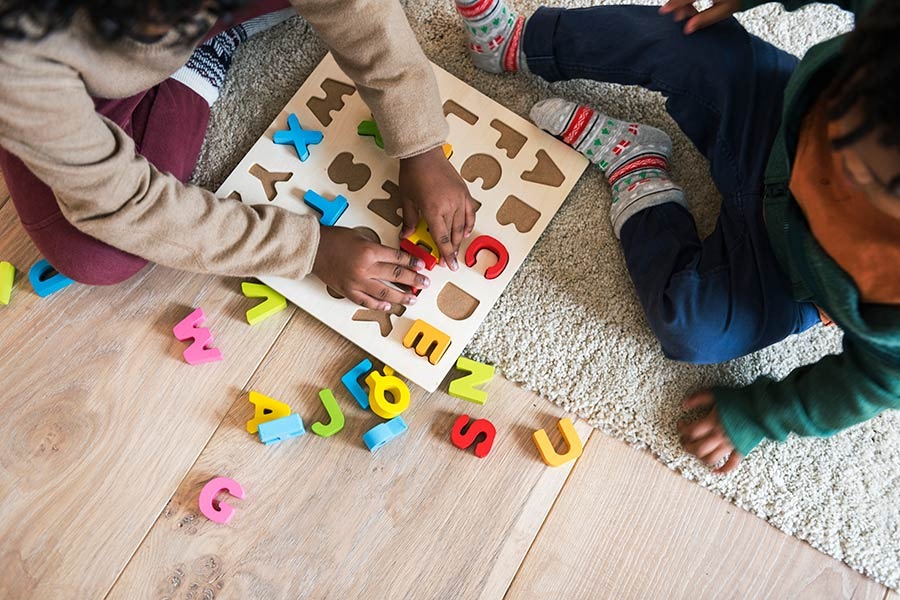
Puzzles and matching or sorting games. Simple puzzles, matching card games, and sorting objects by color or shape build problem-solving skills while a child sits still, which makes them a good complement to the more physical activities above. Sorting laundry by color or matching socks out of the dryer works just as well as a store-bought game, and it gets a chore done at the same time.
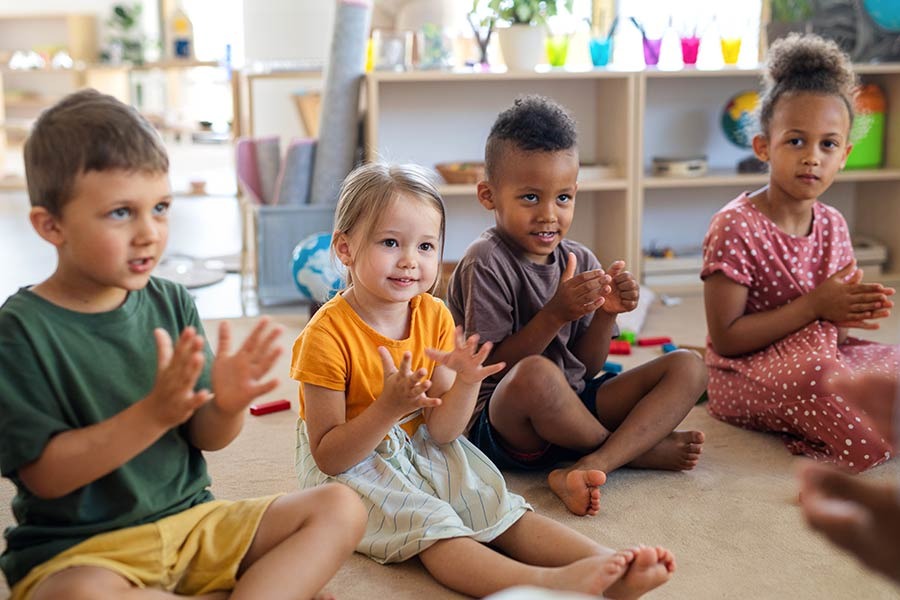
Pretend play and storytelling. Acting out a scene with stuffed animals, playing "restaurant," or making up a story together builds language and social skills. It also gives a child practice with taking turns and reading another person's reactions, whether that person is a sibling, a friend, or a parent playing along. Following your child's lead in pretend play, instead of directing the scene yourself, tends to hold their attention longer and gives them more room to problem-solve on their own.
Reading together daily. Reading out loud, even for ten minutes before bed, is one of the highest-value things a parent can do, and it fits neatly into the time you free up by limiting screen time. The AAP recommends keeping television and video exposure under 2 hours a day for young children, avoiding commercials, keeping TVs out of bedrooms, and not eating meals in front of a screen. That guidance matters beyond just habit: in children ages 2 to 5, more than 2 hours a day of television or video exposure significantly raises the risk of obesity, according to the same AAP guidance. Less screen time simply leaves more room in the day for reading, pretend play, and the other activities on this list.
What are easy activities to boost your child's development at home?
You don't need a curriculum to cover all three domains in a normal week. A few low-cost combinations:
An obstacle course in the living room or backyard (gross motor), paired with playdough or lacing cards afterward (fine motor)
A sorting or matching game before dinner (cognitive), paired with a story read aloud at bedtime (language and cognitive)
A short nature walk after school (gross motor), followed by drawing a picture of something they saw (fine motor and cognitive)
None of these require special equipment. What they require is a bit of intention: noticing which domain your child hasn't touched in a day or two, and reaching for an activity that covers it.
How do I know if my child is developing on track?
Watch for age-appropriate gross motor skills like running, jumping, and climbing, fine motor skills like grasping, drawing, and using utensils, and a reasonable mix of active versus sedentary play across the week. None of these are precise checkboxes, but together they give you a general picture.
Given that many preschoolers spend over 30% of their waking hours sedentary, according to the research the AAP cites, one of the most useful things a parent can do is simply add more active play opportunities rather than worry about hitting an exact number. If you have specific concerns about your child's development, your pediatrician can walk you through a proper developmental screening. This guide is meant to help you build a richer week of play, not to replace medical advice.
A rough weekly check is more useful than a daily one. If gross motor, fine motor, and cognitive play have all shown up somewhere across the week, even in five-minute pieces, you're covering the ground that matters. A single busy day where screens win out isn't a problem. A pattern where one domain never gets touched is worth adjusting for.
How does Strong Roots Preschool build these activities into the day in Northridge?
At Strong Roots Preschool in Northridge, California, these aren't separate categories we think about once a week. They're built into how a normal day runs across our Infant, Toddler, Young Preschool, Preschool, Pre-K, and After School programs, which together cover kids from infancy through the after-school years. Outdoor time, hands-on materials, and guided group activities happen daily, not as an occasional add-on, so gross motor, fine motor, and cognitive play all show up in a normal day rather than depending on parents fitting them in after work.
Founder and Director Narine Mazmanyan brings a background in psychology, pedagogy, and healthcare to how the school structures its days, and the school pairs its whole-child developmental approach with Armenian language preservation, so kids build motor, cognitive, and social skills while staying connected to their heritage language. If you'd like to see how a full day balances gross motor, fine motor, and cognitive activities in practice, schedule a tour of our Northridge campus and walk through a classroom in session.
Strong Roots is licensed by California Community Care Licensing, LIC #195700760, and located at 9054 Darby Ave, Northridge, CA 91325. You can reach the school directly at (323) 990-8181 with questions about enrollment or programs.
For a deeper look at the philosophy behind how we structure whole-child development day to day, see our companion article on our approach to whole-child development.