










It's Not Rocket Science: How to Build a Lifelong Love for Math and Science in Your Child.
As parents, we know teaching our kids to love math and science is important. It helps them do well in school and learn about the world forever. Teaching them is more than just getting them ready for tests.
It's about making them curious and amazed by everything around them. Let's find ways to make learning about math and science fun and helpful for their growth.
Understanding the Importance of Early Math & Science Skills
Math and science are very important for kids to learn early. They help kids love learning and think better.
Studies show that early math and science help kids think better. It makes their brains work better as they grow.
The Foundation for Future Learning
Learning math and science early helps kids do well later in school. It also helps them have more job options when they grow up.
Knowing math and science well lets you solve problems in many ways. This shows why learning them early is important.
Real-World Applications of Math and Science
Math and science are used a lot in everyday life. Kids use math to handle money and learn about nature.
By using math and science, kids become smart at making choices. They become good at figuring things out.
| Application | Math Skills Involved | Science Literacy Involved |
|---|---|---|
| Budgeting | Arithmetic, percentages | Understanding financial systems |
| Gardening | Measuring space, counting plants | Plant biology, ecosystems |
| Cooking | Fractions, unit conversions | Chemical reactions, nutrition |
| Sports | Statistics, scoring | Physics of movement |
Knowing how important math and science are can help us teach our kids well. Starting early helps a lot for their futures.
Creating a Positive Learning Environment
It's key to make learning fun for kids to love math and science. We can make a great space for them to grow by making learning fun. Offering hands-on activities is a big part of this. Kids get to see how what they learn fits into the real world. This makes what they know stronger by using it.
Incorporating Hands-On Experiences
Hands-on activities really get kids into learning. They can do science experiments or build things to learn by doing. Here are some ideas:
- Conducting simple science experiments: Mixing baking soda and vinegar shows chemical reactions well.
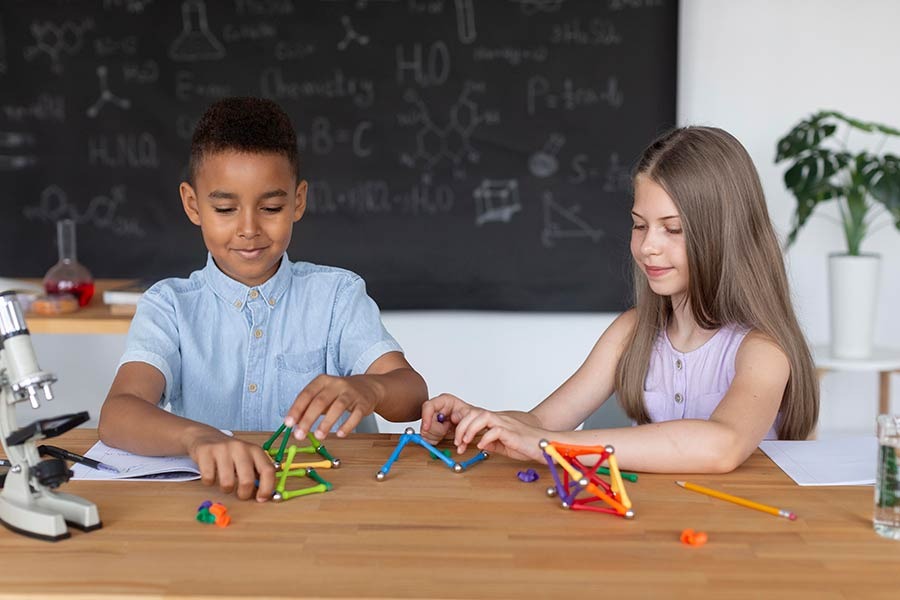
- Building structures with blocks or Legos: This helps with understanding space and basic engineering.
- Cooking together: When they measure ingredients, they're practicing math and having kitchen fun.
Encouraging Curiosity and Questions
It's important to make kids feel okay asking questions. When they can ask, they learn to think deeper. They understand their world better. Here's how we can help:
- Asking open-ended questions: This makes kids think more about what they're learning.
- Promoting discussions about their observations: Talking about what they notice helps them learn even more.
- Creating a safe space for mistakes: Knowing it's okay to be wrong helps them try new things.
By using these ways, we make learning an adventure that's exciting. We help kids love learning. This makes sure they do well in math and science. It lights a spark for learning that stays with them always.
Fun Activities to Spark Interest in Math
Finding fun math activities can make kids see math as fun instead of scary. We can use cool games and real-life examples. This helps kids want to learn math.
Games That Make Math Exciting
Using math games can make learning better for kids. These games are fun and help them practice math skills. Here are some games to try:
- Math Bingo: A fun game where you solve problems to mark off bingo spots.
- Board Games: Playing games like Monopoly teaches about money and math.
- Online Math Apps: Websites like Prodigy and Cool Math Games make learning math fun.
Using Everyday Situations to Teach Math Concepts
Adding math to daily life helps kids learn math easily. Here are some ideas:
- Cooking Together: Cooking lets kids work with fractions and adding.
- Shopping Excursions: Kids learn about numbers by figuring out prices and discounts when shopping.
- Time Management: Talking about schedules teaches addition and subtraction.
With fun math activities and using math in real life, we can help kids love math. This makes them feel good about learning math.
Incorporating Science into Daily Routines
Adding science to our daily lives makes learning fun and interesting. Doing science activities every day helps us love the subject more. We can do easy science experiments at home and look into nature. This helps us know more about the world.
Simple Experiments You Can Do at Home
Doing science at home is a great way to make us curious. Using things like baking soda, vinegar, and food coloring can show us cool stuff. For instance, when we mix baking soda with vinegar, it fizzes. This shows a chemical reaction. We can guess what will happen before we try it. This makes us understand science better.
Nature Walks: Exploring Science Outside
Learning by touching and seeing in nature is very useful. On walks, we look at plants and bugs and talk about ecosystems. Enjoying nature's small details helps us learn science every day. It teaches kids to ask and find out things. Seeing different living things and where they live makes learning biology unforgettable.
Utilizing Technology to Boost Engagement
Today, we can make learning better for our kids by using tech in education. They can learn math and science in fun ways with cool tools. This helps them love learning and remember more.
We have many tools like apps to make learning interactive. This makes hard topics easier and fun.
Educational Apps for Math and Science
Educational apps make learning cool and fun. They help with tough topics and make kids want to learn more. Here are some apps worth checking out:
- Khan Academy: Offers lots of free lessons on math and science for all ages.
- Prodigy Math: A fun game that helps with math in a magical world.
- Science Journal: Lets young scientists record experiments and notes digitally.
- BrainPOP: Provides cartoons and quizzes on math and science stuff.
Online Resources and Virtual Learning
There's more to learn online beyond apps. We can find tons of info and meet learners and teachers from everywhere. Check out these great resources:
| Resource Name | Description | Best For |
|---|---|---|
| Coursera | Has courses from colleges on advanced math and science topics. | Older students in high school and college |
| Edmodo | A place where teachers and students can work together and share stuff. | Kids in K-12 schools |
| NASA STEM | Fun learning about space with videos and games. | Everyone who loves space science |
Using tech, we can make learning math and science deeper and fun. It helps our kids learn in cool ways that fit them best. Plus, it gets them ready for a world where these skills matter a lot.
Encouraging a Growth Mindset in Math and Science
Helping kids believe they can get better at math and science is key. When they know hard work leads to improvement, they become eager learners.
This approach makes them less scared of tough topics. Instead, they're ready to learn new things.
Overcoming Math Anxiety
Math scares a lot of kids, making it hard for them to learn. We can show them ways to feel calm and confident. Here are some ideas:
- Practicing mindfulness to alleviate stress.
- Utilizing positive affirmations about math abilities.
- Breaking complex problems into manageable steps.
It's important to say it's okay to make mistakes. Mistakes help us grow. This can make kids less anxious and more tough.
Celebrating Small Successes
Cheering for every win, big or small, boosts kids' attitude towards math and science. Celebrating these moments pushes them to face bigger challenges. Ways to celebrate include:
- Creating a rewards system for completing assignments or overcoming difficult concepts.
- Providing praise for effort rather than just results.
- Maintaining a visual board to highlight their progress in learning.
Celebrating shows kids that learning is a journey worth the effort. This mindset helps decrease their fear of math. It also helps them do well in school.
Importance of Role Models in STEM
It's really important for kids to know about successful people in STEM. Seeing someone like them do well in science, technology, engineering, and math helps them dream big. We tell them about different people, especially women in science, succeeding. This makes them want to follow in their footsteps and think about a career in STEM.
Introducing Your Child to STEM Professionals
Meeting people who work in STEM can make kids want to learn more and dream big. There are STEM fairs, workshops, and school events that let kids see science in action. They can meet inspiring people and go on trips to science places. This helps them see how fun and exciting STEM can be.
Stories of Successful Women in Science
Talking about women who have done amazing things in science can be very inspiring. For example, Dr. Mae Jemison, the first African American woman in space, and Dr. Jennifer Doudna, who helped develop CRISPR technology, show that women can achieve great things in STEM. Sharing these stories makes kids believe they can do anything, no matter where they come from.
| Name | Field | Contribution |
|---|---|---|
| Marie Curie | Physics/Chemistry | Discovered radium and polonium; first woman to win a Nobel Prize. |
| Katherine Johnson | Mathematics | Pioneered calculations for NASA's manned spaceflights. |
| Rosalind Franklin | Biology | Contributed to the discovery of the DNA double helix structure. |
| Dr. Sylvia Earle | Marine Biology | Renowned oceanographer and advocate for marine ecosystems. |
Building a Supportive Community
It's very important to help our kids learn about math and science. We should find good local STEM programs and clubs. They can make new friends and learn cool things about science and math there. Being part of a team and being creative helps them get better at these subjects.
Finding Local Programs and Clubs
There are many local places with fun STEM activities for kids. We can look for:
- Community centers with after-school math clubs
- Science museums that host workshops and interactive exhibitions
- Libraries offering coding and robotics programs
- Universities that run outreach initiatives for children
Joining local STEM programs is great for learning. It also helps everyone support our kids' education, which helps them do well.
Connecting with Like-Minded Parents
Meeting other parents is really helpful for our kids' school life. We can find parents who like the same things and help each other. We can:
- Joining social media groups focused on education and STEM in our area
- Participating in local PTA meetings to discuss educational initiatives
- Forming informal parent-cooperative groups to support school projects
Talking and working with other parents is great. It makes learning fun for our kids. We help make school better for them, turning learning into an exciting journey.
Parental Involvement in Learning
We play a big part in our kids' school lives. Being involved helps shape how they see and enjoy learning. Helping with homework and cheering them on builds their knowledge and love for learning.
How We Can Participate in Homework
Helping our kids with homework shows them learning matters. Here are fun and helpful ways:
- Establish a dedicated study area. A clean space means fewer distractions.
- Set a consistent time for homework. A regular schedule teaches discipline.
- Encourage questions. Asking questions helps them think and learn on their own.
- Be a guide, not just a tutor. Encourage finding answers on their own.
Setting Educational Goals Together
We can help set learning goals with our kids. It makes them more eager to learn. Here's how:
- Make both short and long goals together.
- Check progress with clear steps.
- Celebrate all wins, big or small.
- Change goals as they learn and grow.
Goal setting makes our bond stronger and gives a clear plan for doing well. Being part of their learning journey builds their confidence and love for learning.
Conclusion
Teaching math and science is key to our kids' future. It's more than just learning. It builds a base for their success.
We, as parents, play a big part. We make learning fun and keep them wanting to learn more.
Learning with support is important too. Doing things together helps. It makes math and science exciting.
We are making learning important. We show how fun exploring can be.
Let's start this great adventure. We'll make our kids love learning. This will help them face hard schoolwork. It also opens many doors for them.
What we do now leads to their success later. Let's help our kids win in the future.
FAQ
What are the best ways to introduce math concepts to young children?
Start with fun activities like games and puzzles. This makes learning a good time. Use math in daily life, like during cooking or shopping, to show kids its use.
How can we create a positive environment for science learning?
Hands-on experiences and chats can make a positive space. Asking big questions sparks curiosity. Doing simple experiments at home turns learning into a fun journey.
What role does technology play in teaching math and science?
Technology helps a lot in education. Educational apps and websites match kids' learning styles, making lessons more engaging. Online groups offer useful support and share resources.
How can we help our children overcome math anxiety?
Showing it's okay to find math tough is key. Praising small wins boosts confidence. Teaching them that effort makes them better shows skills can grow.
Why is it important to expose children to STEM role models?
Seeing diverse STEM role models can inspire kids. It shows everyone can reach their goals, no matter who they are.
What community resources are available to support our children's math and science education?
Look for local clubs and programs for structured learning. Joining groups with other parents helps share the learning adventure.
How involved should we be in our children's homework and projects?
Being part of homework and projects is important. It backs up what they learn. Setting goals together makes them take charge of their learning. It also shows our support.