






Creativity and Brain Development in Children: What's Actually Happening in Their Growing Minds
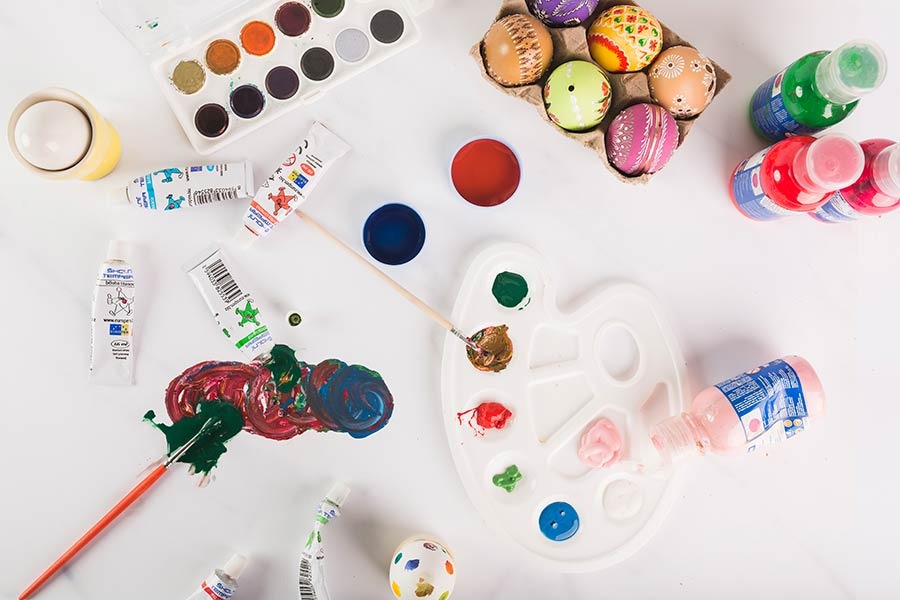
When your toddler smears three colors of paint into a muddy brown swirl, or your four-year-old insists a cardboard box is a spaceship, something real is happening inside their head. The link between creativity and brain development in children is one of the more misunderstood corners of early childhood research, often oversold in marketing copy but genuinely interesting once you look at what the actual studies say. This piece walks through what's solidly established, what's promising but narrow, and what's simply overstated, so you can look at your kid's messy art table with a clearer sense of what's going on underneath it.
What Actually Happens in a Child's Brain During Creative Play?
Short answer: creative play happens during exactly the window when a child's brain is most able to reorganize itself in response to experience. That window doesn't stay open forever, which is part of why open-ended, hands-on activity in the early years carries more developmental weight than the same activity would at 25.
Why Is Neuroplasticity Highest in the Early Years?
Neuroplasticity is the brain's capacity to reorganize and adapt based on experience, and according to the Harvard Center on the Developing Child, that capacity is greatest in the first years of life. It doesn't shut off after preschool. Plasticity continues throughout a person's whole life. But it's strongest early on, which is exactly why early experiences carry outsized influence.
Basic brain architecture builds from the bottom up, starting very early. Genes provide the blueprint, but it's actual experience, the sights, sounds, textures, and interactions a child has every day, that shapes how brain circuits form and connect, according to the same Harvard research guide. Those circuits either become a sturdy foundation for later learning, health, and behavior, or a more fragile one, depending on what kind of experiences build them.
There's a practical reason this matters beyond the abstract science. The Harvard Center on the Developing Child notes that it's easier and less costly to build strong brain circuits during the early years than it is to try to intervene later. Early childhood isn't just a nostalgic phase adults look back on. From a brain-architecture standpoint, it's the most efficient window there is.
The scale of what's happening is hard to overstate. According to Zero to Three, a baby's brain forms more than one million new neural connections every second during the first few years of life. Those connections don't all stick around. The ones that get reinforced through repeated, positive experience, being talked to, played with, handed a paintbrush and allowed to make a mess, are the ones that strengthen and last. Creative play is one of the more accessible ways a young child racks up that kind of repeated, hands-on experience.
Does Art Really Make Kids Smarter, or Is That Overstated?
Honest answer: not in the blanket way a lot of preschool marketing implies. The research does support specific, narrow benefits, but "art makes your kid smarter" as a general claim isn't something the science actually backs.
What Did the Dana Consortium's Research Actually Find?
Between 2004 and 2008, the Dana Foundation ran something called the Arts and Cognition Consortium, a multi-year research effort led by neuroscientist Michael Gazzaniga and carried out across seven universities. It's arguably the single largest coordinated research push on this exact question, and its findings are more interesting, and more limited, than most of what gets repeated about "art and the brain."
According to Greater Good Science Center at UC Berkeley, which summarized the consortium's "Learning, Arts, and the Brain" report, individual research teams did find real, specific correlations. A University of Oregon team found that arts activities can train attention in young children between ages 4 and 7, and stronger attention supports cognition more broadly. Another team found that intensive music training was linked to better geometry and map-reading performance. A third found that more music training correlated with reading-fluency gains in children between ages 7 and 12.
Those are real, useful findings. But here's the part that tends to get left out of preschool marketing: the consortium's own published report stated there was no concrete evidence that art makes kids smarter as a general claim. The researchers involved explicitly noted that many arts advocates had overstated their findings, stretching a handful of specific, narrow correlations into a sweeping claim about intelligence that the data simply didn't support.
That distinction matters. Music training correlating with map-reading in one study group is not the same thing as "art makes children smarter." One is a specific, measured finding. The other is a marketing slogan wearing a lab coat.
There's a second study worth mentioning here, with the same caution attached. A neuroimaging study published on ScienceDirect found that in children ages 8 to 12, performance on a divergent-thinking task (generating multiple uses for an everyday object) was associated with the volume and connectivity of a brain region called the hippocampus. That's a real, peer-reviewed finding, but it's correlational, not causal, and it's measured in grade-schoolers, not preschoolers. It doesn't mean a single art class rewires a hippocampus. It means there's an association worth continued study in an older age group than the one most preschool programs serve. Treat it as a data point, not a promise.
So where does that leave a parent trying to figure out what's actually true? Somewhere in the middle. Creative activity is linked to real, specific cognitive benefits in some studies. It is not a proven path to a higher IQ. Both things are true at once, and a program that tells you otherwise is skipping the second half of the sentence.
What Is Divergent Thinking, and Why Does It Matter?
Divergent thinking is the specific cognitive skill most closely tied to what people usually mean by "creativity," and it has a name and a research history that goes well beyond vague inspiration talk.
The concept was defined by psychologist J.P. Guilford back in 1956, and it describes the ability to generate many different ideas or possibilities in an open, spontaneous, flexible way, according to Edutopia. It sits in contrast to convergent thinking, which is about narrowing down to the one correct answer, the kind of thinking a fill-in-the-blank worksheet asks for. When a child stares at a pile of craft scraps and comes up with six different things it could become, that's divergent thinking in action. When they pick the one option that actually works and commit to it, that's convergent thinking closing the loop.
Both matter. A child who only generates ideas without ever narrowing them down doesn't finish anything. A child who only ever looks for the single correct answer doesn't stretch. Creative activity, at its best, gives kids repeated, low-stakes practice moving between the two.
Does Children's Creative Thinking Change as They Grow Up?
It does, and not in the direction you'd hope. Kyung Hee Kim analyzed roughly 300,000 scores from the Torrance Tests of Creative Thinking, a standardized measure of divergent thinking used in research since the 1950s. Published as "The Creativity Crisis" in the Creativity Research Journal in 2011 (and covered widely, including by Newsweek), the analysis found that American children's creativity scores rose steadily alongside IQ scores until around 1990. After that, creativity scores began declining, and the decline was most pronounced among younger children, specifically kindergarten through sixth grade.
It's worth being precise about what this study does and doesn't show. It measures standardized test scores across a large population over time, not the effect of any one art class or program. It's not proof that a specific activity reverses the trend. What it does establish is that divergent thinking isn't something that simply develops on its own as kids get older. It's a skill that, left unpracticed, appears to erode over time at a population level. That's the actual argument for building creative activity into a child's routine, not a promise about IQ points, but evidence that the skill needs deliberate nurturing rather than passive assumption.
How Does Creativity Connect to Problem-Solving Skills?
Directly, and this is one of the better-supported claims in the research. Peer-reviewed work has linked open-ended creative activity to problem-solving as a specific, named skill, not just a vague byproduct of "being creative."
A study published in PLOS One, examining early-childhood teachers' actual classroom practices, identified open-ended art activities, alongside music, movement, drama, and hands-on science and math exploration, as key practices for building children's creative thinking, problem-solving ability, cause-and-effect reasoning, and cognitive flexibility. That's a study of what experienced early-childhood educators actually do, not a theoretical model. Open-ended art shows up in that list of practices for a reason.
What Role Does Executive Function Play in Creative Thinking?
A meaningful one, and it's where a lot of "creativity" conversations skip a step. Generating ideas is only half of creative problem-solving. Evaluating those ideas and picking the one worth pursuing, convergent thinking again, depends on executive function: working memory, cognitive flexibility, and inhibitory control.
A longitudinal study published in Frontiers in Psychology found that structured, play-based classroom games used with preschoolers over roughly a three-month period improved exactly those executive-function skills. Cognitive flexibility in particular, the ability to shift between ideas or approaches rather than getting stuck on one, is closely linked to creativity. A child who can hold two possible solutions in mind and switch between them is doing something that looks a lot like the definition of creative problem-solving, and it's a skill research suggests can be built through consistent, playful practice rather than left to develop on its own.
Is My Child's Messy, Open-Ended Art Actually Building Brain Connections?
Yes, and the mess itself is a reasonable sign that the process is working rather than a sign it's gone off track.
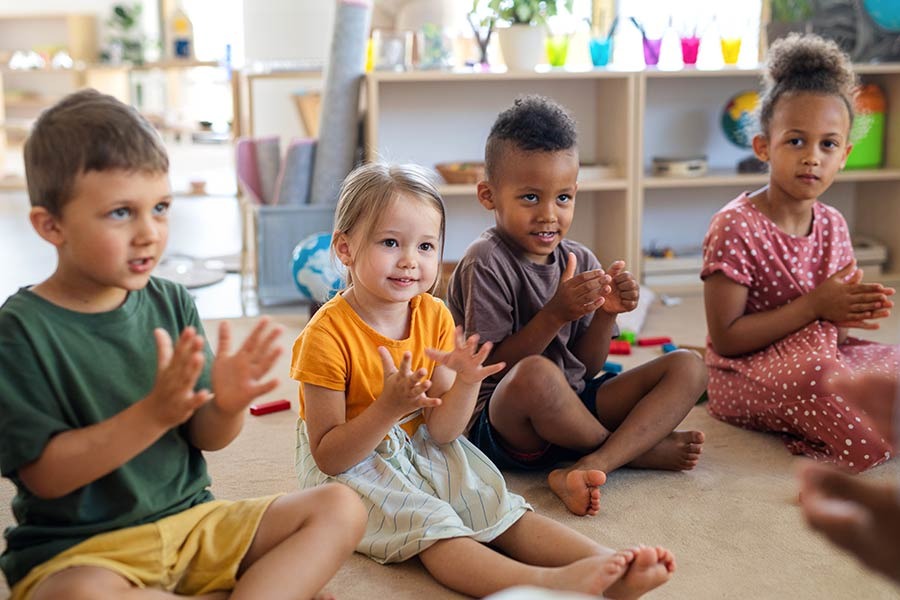
Around ages 1 to 3, toddlers' imaginations expand rapidly through pretend play, turning a box into a car, inventing a story about a stuffed animal, according to Zero to Three. That kind of play helps toddlers think symbolically, explore emotions and scenarios safely, and practice divergent thinking, generating multiple ideas or solutions, well before they have the vocabulary to explain what they're doing.
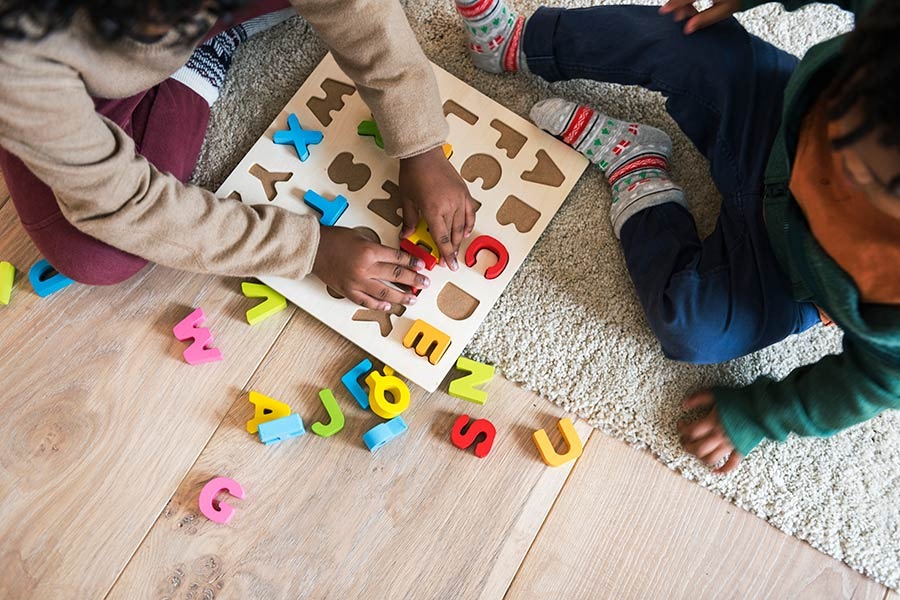
Layer in what's happening at the neural level. Those one million-plus new connections forming every second in early childhood strengthen through repeated, positive experience. A toddler smearing paint, restacking blocks a different way, or narrating an invented story to a stuffed rabbit is generating exactly that kind of repeated, hands-on experience. General research on early-childhood creativity also suggests that open-ended materials, ones without a single "correct" use, tend to support divergent thinking better than materials that only have one right way to be used. That's a softer, more general finding than the neural-connection research above, worth treating as a reasonable pattern rather than a settled law, but it lines up with what the more rigorously studied claims already point toward: process matters more than a tidy end product.
None of this means a finished piece of art is worthless. It means the finished piece isn't really the point. The value is mostly in what happened while your child was making the decisions along the way.
How Does Strong Roots Build Creative Thinking Into the Day?
At Strong Roots Preschool in Northridge, creative thinking isn't treated as a once-a-week art period bolted onto the schedule. It runs through a Montessori-inspired, STEAM-enriched curriculum where open-ended exploration shows up across the day, not just during a dedicated craft time.
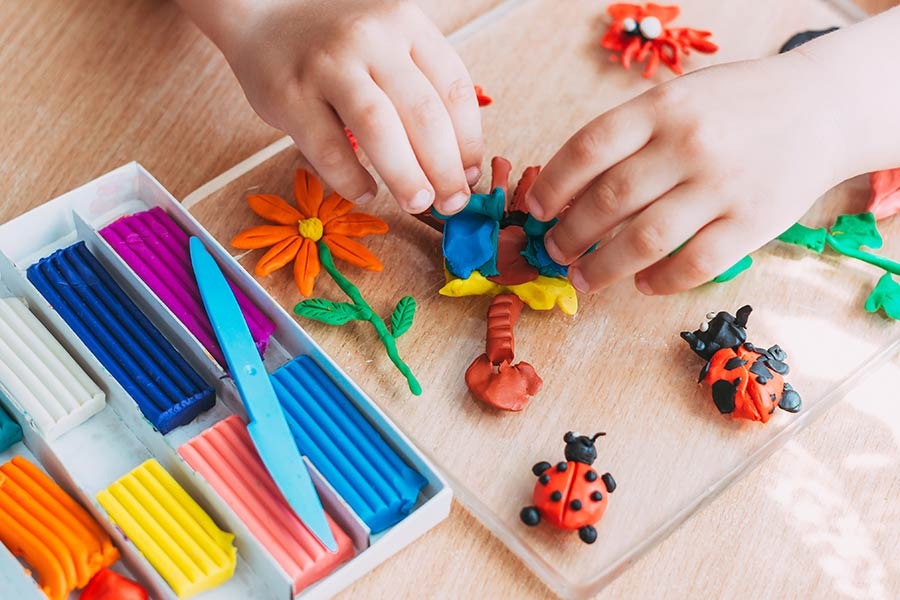
The preschool's weekly arts and crafts class leans on process art, open-ended, child-led creating without a fixed end product, which is exactly the kind of activity the PLOS One research above links to problem-solving and cognitive flexibility. If you want the deeper walkthrough of how that program actually runs by age group, from toddlers exploring finger paint through after-school kids tackling multi-step projects, see our companion piece on the arts and crafts program for preschoolers at Strong Roots. This piece focuses on the brain science behind why that approach matters; that one covers what it looks like in the classroom.
Every teacher at Strong Roots holds a Child Development Associate (CDA) credential or an equivalent California-recognized qualification, and staff-to-child ratios are held at California's licensed minimums as a floor, not a target to drift toward. Strong Roots is a licensed California child care facility, license #195700760, located at 9054 Darby Ave, Northridge, CA 91325.
If you'd like to see how creative thinking, problem-solving practice, and open-ended play show up across a real day at Strong Roots, from Infant Care through the After School Program, schedule a tour of Strong Roots Preschool in Northridge and walk through an actual classroom.
How Much Creative Time Do Kids Need Each Day?
There's no single sourced number for the "correct" number of daily minutes, and that's worth saying plainly rather than inventing a figure to sound more authoritative. General early-childhood guidance favors keeping open-ended creative materials available throughout the day over chasing a rigid timer. The research above supports frequency and openness of access over any particular clock time, consistent open-ended opportunity rather than one tightly scheduled session.
In practice, that looks like crayons, paper, blocks, or a box of loose parts being genuinely accessible most days, rather than a single 15-minute craft squeezed between other activities and then put away until next week. The Strong Roots approach, weaving creative and open-ended activity through a full Montessori-inspired day rather than isolating it to one class period, reflects that same principle: access and consistency matter more than a strict duration.